
You got engaged in March. Your families already want a date, and your cousin keeps texting you some planner’s Instagram. So do you book someone now, or are you months early? The honest answer rests on three things: your wedding date, whether you’ve signed a venue, and the kind of help you actually want.
Figuring out when to hire a wedding planner is less about a magic number than about matching your lead time to the scope of work. A full-service planner who sources your venue, designs the event, and wrangles 15 vendors has to start far earlier than a coordinator who steps in six weeks out to run the day. What follows is a realistic timeline by wedding type. I’ve also flagged the signals that tell you you’ve waited a beat too long.
The short answer: 12 to 16 months for full-service
Most couples planning a traditional wedding with 100-plus guests hire a full-service planner between 12 and 16 months before the date. That window exists for a reason. Popular venues in major markets book 14 to 18 months out for peak-season Saturdays, and a good planner earns part of the fee just by getting you into the right room before it’s gone.
Targeting a Saturday in May, June, September, or October? Treat 14 months as your default. Engaged this spring for a fall-of-next-year date? Start interviewing planners within a month or two. Off-season dates give you more slack. For a January wedding, or a Friday or Sunday, 9 to 12 months is usually fine.
The planner’s own calendar matters too, and this is the part couples underestimate. Experienced solo planners cap themselves at 15 to 25 weddings a year, and the strong ones fill prime Saturdays first. The planner you love may already be booked for your exact date 13 months out. Reach out early and you get a real choice instead of whoever is left. I’d rather a couple over-shop at 15 months than panic-pick at nine.
It helps to know what that fee actually covers before you balk at booking early. Full-service usually means venue scouting, design and styling, vendor contracts and negotiation, budget tracking, and a lead planner plus an assistant on the day. In a mid-size US market that runs $4,000 to $9,000, and in New York or the Bay Area it climbs past $12,000. You’re buying back roughly 250 hours of your own time, which is the part couples forget to price in.

When to hire a wedding planner for a destination wedding
Destination weddings push everything earlier. Marrying in Tuscany, Tulum, or on the Amalfi Coast? The right time to hire a wedding planner is 16 to 24 months out, and that’s not padding. You’re coordinating across time zones, often in a second language, with contracts written under foreign law and deposit schedules that look nothing like home.
A destination specialist needs lead time to lock a venue and hold a block of 30 to 60 hotel rooms. Guests need a save-the-date 10 to 12 months ahead so they can book flights. Villa rentals in peak Mediterranean season often demand a 30% deposit at signing, and the good ones sell out more than a year out. Miss that window and your dream property is simply gone.
Then there’s the legal layer, which trips up more couples than the catering ever does. Some countries make you arrive several days before the ceremony for civil paperwork. Others won’t recognize a foreign marriage without an apostille process that drags on for weeks. A planner who has actually run weddings in that country knows whether you need a symbolic ceremony abroad and a legal one at home. You cannot reverse-engineer that knowledge in the last 90 days, so book early to get access to it.
Budget early, too, because destination costs hide in places a local wedding never touches. Think welcome dinners for traveling guests, a shuttle between the hotel block and a hilltop venue, and import fees on anything you ship ahead. A planner who quotes a flat 15% on a Tuscan wedding is also quietly saving you from a $2,000 corkage surprise or a vendor who only takes cash in euros. Lock those line items down a year out, not three weeks before.
Day-of coordination runs on a different clock
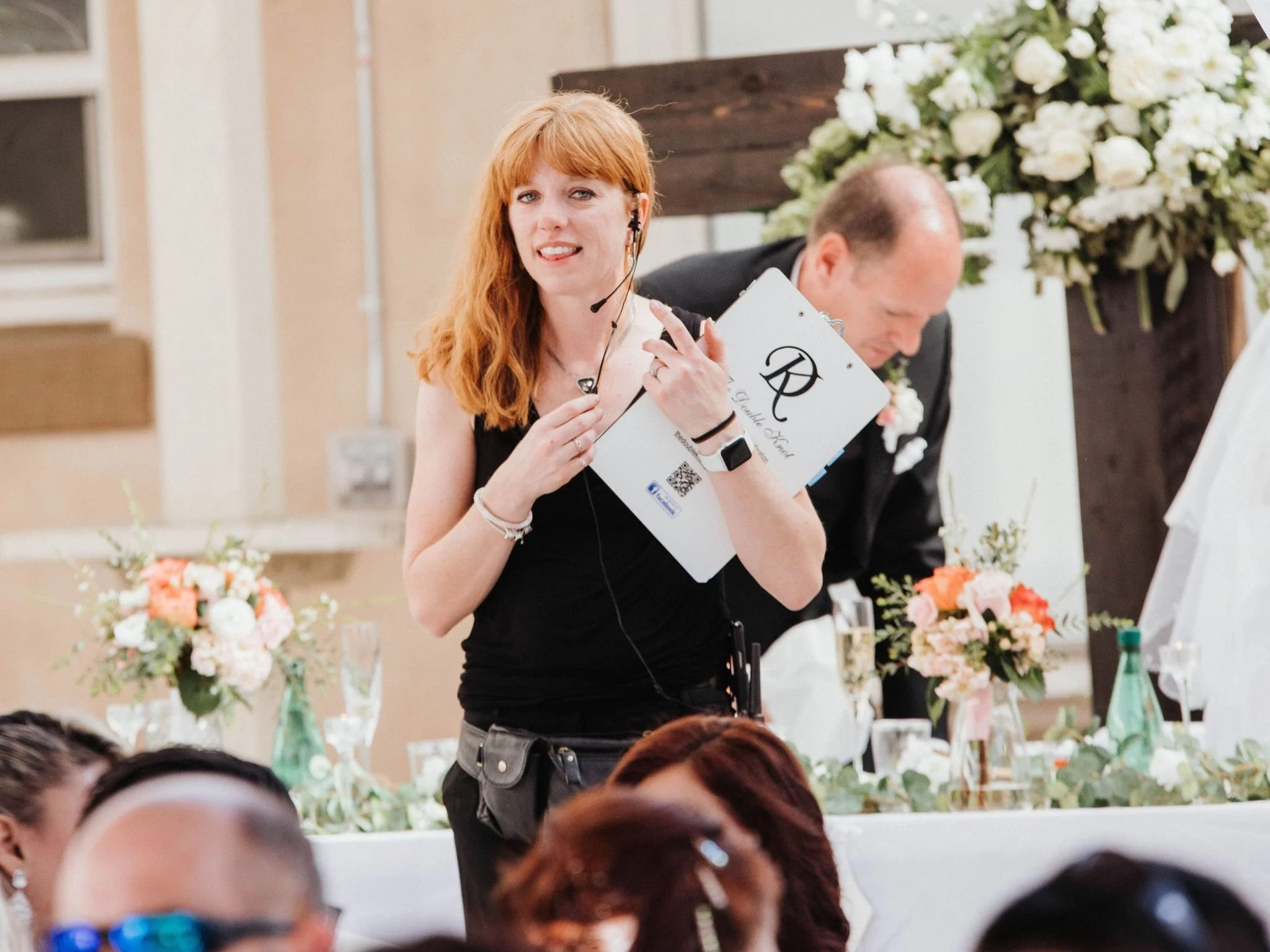
Planned the whole thing yourself and just don’t want to chase the caterer at 4 p.m. on the day? Then you’re after day-of coordination, and it books far later. Most couples hire this role 3 to 6 months out. The coordinator usually engages in earnest around the four-to-six-week mark to build your timeline, confirm vendors, and run the rehearsal.
Don’t read “day-of” too literally, though. The good ones start working with you 30 to 60 days out, not at sunrise on the wedding morning. Booking the person should happen earlier than you’d think. The same peak-season crunch applies, because a coordinator charging $1,500 to $2,800 still has one body and takes exactly one wedding per date.
Here’s my rule: book day-of coordination by the time you’ve signed your major vendors, meaning venue, catering, and photography. That’s usually 6 to 9 months out, even if the coordinator won’t lift a finger for months. Waiting until six weeks before to start searching, in peak season, is how you end up with no one available and a maid of honor holding a clipboard she never asked for.
A good month-of coordination or day-of package buys you a vendor-by-vendor timeline shared with everyone, a point person so your mother isn’t fielding the florist’s calls, the rehearsal run-through, and someone to handle the inevitable 5 p.m. crisis when the cake table is missing. For $1,500 to $2,800 it’s the cheapest insurance in the whole budget, and the one line item past clients say they’d never cut.
What changes if you’ve already booked the venue
Plenty of couples lock a venue before they ever think about a planner, usually because the venue had one date left and they grabbed it. If that’s you, the math shifts. You no longer need a planner for venue sourcing, which is one of the most time-sensitive parts of the job, so you’ve bought yourself some real flexibility on timing.
What you may have lost is leverage. Booking a venue solo means you signed whatever contract they slid across the table. Before you hire anyone, have a planner read that contract line by line. The clauses that matter most are easy to miss: the force-majeure language, the final-headcount deadline, whether you’re locked into in-house catering at a per-head minimum, and the rain plan for outdoor space. Most couples skim right past the headcount deadline and end up paying for 30 empty seats.
I once watched a couple discover, four weeks out, that their final-headcount deadline had passed at 45 days. They were billed for 140 plated dinners when 116 people came, roughly $2,600 they never got back. A planner reading the contract in week one would have flagged that date and the deposit schedule sitting next to it. That single catch often pays for a partial-planning package on its own.
With the venue settled, a partial-planning package often beats full-service. You bring the date and the room; the planner handles the rest of the vendor sourcing, design, and logistics. The timing there sits comfortably at 8 to 12 months out, since the longest-lead item is already off your plate. Honestly, this is the sweet spot most engaged couples never realize they qualify for.
How early booking affects price and availability
Hiring early rarely makes a planner cheaper, but it changes what your money buys. Most planners price by package or as a percentage of total budget, commonly 10% to 15% for full-service. Industry surveys like The Knot’s annual wedding study put the average US wedding well above $30,000, and the planner’s cut scales with that number. The rate won’t drop because you booked at 16 months instead of 10. Booking early buys access: the planner you wanted, on the date you wanted, with time to do the work right.
There’s a real cost to waiting, and it isn’t the planner’s fee. It’s the downstream vendors. Book late and you’re sourcing florists, photographers, and bands who already lost their best dates. You either settle or pay a premium for someone willing to squeeze you in. A florist who’d have done your wedding at a $4,500 minimum in a normal window may quote higher, or pass entirely, when you show up 90 days out. This is where cheap last-minute quotes hide expensive surprises.
A few timing realities worth pricing into your decision:
- Peak-season Saturdays in May, June, September, and October book 12 to 18 months ahead in most US metros.
- Top photographers and bands often lock prime dates a full year out.
- Many planners require a 25% to 50% deposit to hold your date, and it’s usually non-refundable.
- Rush engagements under six months sometimes carry a short-timeline surcharge of 10% to 20%.
Signs you’ve waited too long, and what to do
Sometimes life happens and you’re staring at a date five months out with nothing booked. You’re not doomed, but adjust your expectations and move fast. The clearest warning sign is simple: the planners you contact are already booked for your date. When two or three say no in a row, that’s the market telling you supply is tight for your specific Saturday.
Inside six months with little locked down? Prioritize ruthlessly. Secure a venue and a planner in the same week if you can, because every other vendor flows from those two. Stay flexible on whatever has the most competition. Consider a Friday or Sunday, an off-peak month, or a date the venue is itching to fill. Planners can often pull a discount on a date the venue wants gone.
For a genuinely short timeline, hunt for planners who advertise short-notice or elopement work, since they keep their pipelines flexible by design. A smaller guest count is your friend here. A 30-person wedding comes together in 90 days far more easily than a 180-person one. The one thing you can’t buy back is the calendar, so book the date-dependent roles first and fill in the rest after.
A real short-timeline win looks like this. A couple came to me 19 weeks out with only a guest list. We grabbed a restaurant buyout for a Friday in March, booked a photographer who’d had a cancellation, and skipped the band for a tested playlist and a $400 sound rental. Eighty guests, eleven weeks of work, and no surcharge, because nothing was last-minute panic, just decisive. Short timelines reward couples who decide quickly and cut the wish list early.

Once you’ve hired, how to use the lead time well
Booking the planner is the start, not the finish, and the months you’ve bought only pay off if you use them. Expect your planner to front-load the big decisions: budget allocation across categories, the guest count that drives everything, and the venue and catering choices that eat the largest share. Get those locked in the first 60 to 90 days, because nearly every other decision depends on them.
A healthy full-service timeline looks roughly like this. By 12 months out, venue and planner are signed and the budget is mapped. By 9 months, photographer, caterer, and band or DJ are booked. By 6 months, save-the-dates are out, attire is chosen, and the florist is confirmed. By 3 months, you’re deep in details: final headcount projections, seating logic, the day-of timeline. The last 30 days are confirmations and contingencies, not big swings.
Use early access to your planner for the unglamorous stuff, not just the Pinterest board. Have them pressure-test your budget against your guest count before you fall for a venue you can’t afford to feed everyone at. Ask them to flag the contract clauses and deposit deadlines that ambush couples. Most couples overspend on florals and forget the deposits, and a sharp planner catches both. That’s the real return on hiring early, and it’s a big part of why knowing when to hire a wedding planner matters as much as who you hire. Still comparing options? Reach out to two or three planners for your date this week, because availability, not budget, is usually the first door to close.