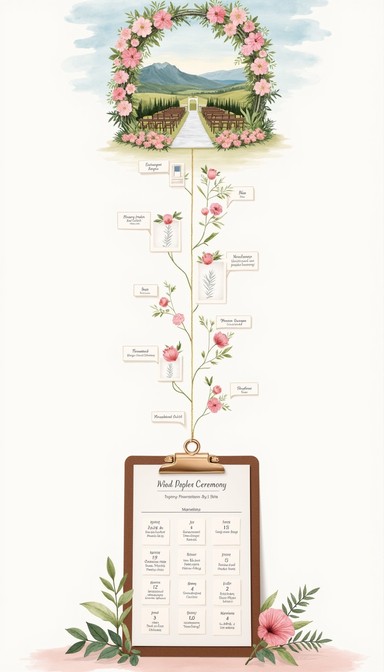
You booked a venue, you have a Pinterest board with 300 pins, and your aunt keeps asking whether you actually need a planner or whether that money buys a better bar. Fair question. So what does a wedding planner do that you can’t handle with a shared spreadsheet and a few free weekends?
The honest answer: some of it you could do yourself, and some of it you really shouldn’t try to do on the day you’re getting married. A planner’s job splits into three buckets that most couples don’t see clearly until they’re inside the process. There’s the long planning runway, the vendor machinery underneath it, and the eight hours of the wedding day itself where everything either holds together or falls apart. Let me walk through each, with the numbers and the boundaries.
What does a wedding planner do in the months before the wedding?
Most of the value happens before anyone puts on a dress. A full-service planner typically starts 9 to 14 months out and logs somewhere between 150 and 250 hours across the engagement. That time goes into a real project plan: a master budget, a vendor sourcing list matched to your style and price point, a design direction, and a production timeline that gets more detailed every month.
Early on, the work is decisions. Say you want a September garden wedding for 120 guests at $55,000. Your planner tells you that number supports a mid-tier florist but not the cascading ceiling installations you saved on Pinterest, so you either move money or move expectations. That reality check, done in month two instead of month nine, is worth more than most couples realize. It prevents the slow bleed where you overspend on the first three vendors and have nothing left for catering.

The middle months are logistics. The planner collects contracts, tracks deposits, builds the floor plan, watches the guest count wobble as RSVPs come in, and keeps a running timeline vendors will actually reference. A full-service planner does the sourcing and negotiating for you. A partial planning package assumes you’ve already booked some vendors and the planner steps in to organize and fill the gaps. Either way, the planner holds the whole picture while you’re only seeing the one piece in front of you that week.
What a wedding planner does on the day itself
The wedding day is where even skeptics come around. A planner or lead coordinator usually arrives 8 to 10 hours before the ceremony and stays through the last dance or the venue’s hard-out time. On a 120-guest wedding, that’s often a lead plus one or two assistants, and the day runs on a minute-by-minute timeline the planner built and sent out the week before.
Here’s the part couples don’t picture. The cake arrives with the wrong tier count. The shuttle is 20 minutes late. The best man left the rings at the hotel. Your florist and your caterer both think they own the same eight feet of load-in space. None of that reaches you, because the planner is the single point of contact every vendor calls when something goes sideways. You’re taking photos. They’re solving the shuttle.
A good day-of lead is also running the room’s tempo: cueing the processional, telling the DJ to move speeches up because dinner ran long, making sure the photographer gets the sunset window, quietly handing a groomsman a stain pen. If you want a closer look at how that day-of role is structured and priced, the day-of coordination category lays out what the package actually includes, because “day-of” is a misleading name for work that really starts 4 to 6 weeks out.
The vendor management most couples underestimate
A 120-guest wedding involves a small pile of separate businesses: caterer, florist, photographer, videographer, DJ or band, officiant, rentals, hair and makeup, transportation, cake, and often a stationer and a linen company on top. That’s 10 to 14 contracts, each with its own deposit schedule, cancellation terms, arrival window, and point of contact. Somebody has to keep all of that synchronized. Without a planner, that somebody is you, usually at 11pm on a work night.
The planner reads every contract before you sign. This is where experience pays for itself. They catch the photographer’s 8-hour cap that doesn’t cover your late exit, the caterer’s 22% service charge that isn’t the same thing as gratuity, the rental company’s damage waiver, and the florist’s 50% nonrefundable deposit due at booking. They know which force-majeure clauses are standard and which ones quietly park all the risk on you.
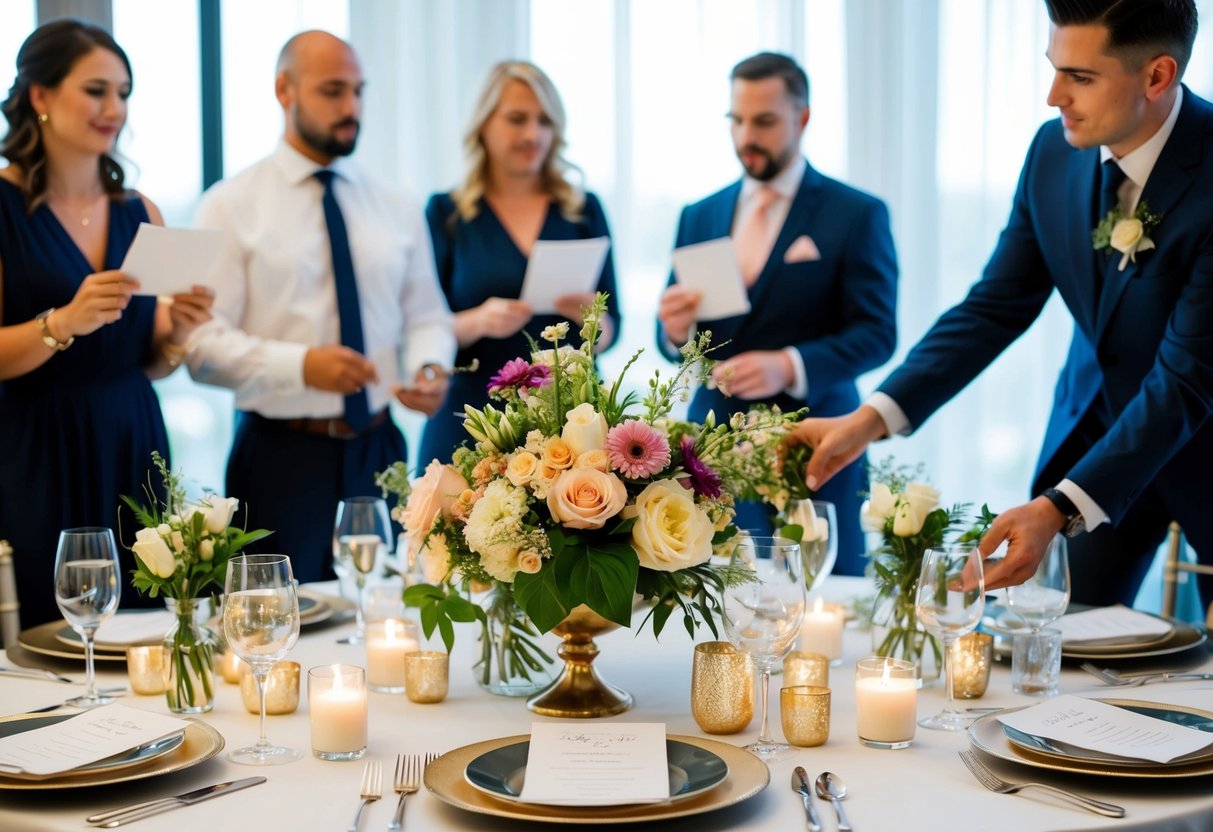
They also manage the relationships, which matters more than it sounds. Planners send vendors repeat business, so a florist who might slow-walk a stranger’s emails answers a known planner the same day. When your caterer needs a final headcount 10 days out and you’re still agonizing over a plus-one, the planner absorbs that pressure and hands the vendor a clean number. And when a vendor underperforms, the planner is the one who has the uncomfortable conversation, not you three days before your wedding.
Budget management and where a planner saves you money
The most common objection is cost. The average U.S. wedding cleared $30,000 in recent years, according to The Knot’s annual wedding cost study, and a full-service planner runs 10% to 20% of that total or a flat fee often between $5,000 and $12,000, more in major metros and for luxury productions. Day-of coordination lands closer to $1,500 to $3,500. That’s real money, and the fair question is whether the planner returns any of it.
Sometimes the math genuinely works in your favor. A planner who books your florist, caterer, and rentals as part of an ongoing relationship can negotiate better rates or waived fees than you’d get cold. They’ll steer you away from the $4,000 mistake, like renting a tent you don’t need because the venue’s rain plan already covers 130 people indoors. They right-size the guest count’s true cost, because every extra 10 guests runs roughly $1,500 to $2,500 once you add catering, bar, rentals, and stationery. This is where cheap day-of quotes hide expensive surprises.
But be honest about the ceiling. A planner is not usually going to save you their entire fee in hard dollars. On a $30,000 wedding, the savings might be $2,000 to $4,000 against a $4,500 planner cost. What you’re actually buying is a mix of some cash savings, a lot of hours back, and the difference between a budget that holds and one that quietly creeps to $38,000 because nobody was tracking the running total. If your budget is tight, a budget-friendly planner or a partial package often makes more sense than skipping planning support entirely.
What a wedding planner does NOT do
Setting expectations honestly matters, because a mismatch here is where couples end up disappointed. A wedding planner is not your therapist, though a good one has calmed a lot of family tension over the years. They’re not going to referee the actual fight between your mother and your future mother-in-law over the seating chart, though they’ll build three versions of that chart so you have options ready.
Most planners do not do heavy physical setup unless it’s spelled out in the contract. Your planner will place escort cards, adjust centerpieces, and straighten a crooked runner, but they are not hauling 40 tables and stacking chairs. That’s the rental company or the venue’s setup crew, and if the job isn’t clearly assigned to someone in writing, it becomes a day-of scramble. Read that line in your contract carefully.
A planner also isn’t a substitute for a designer if you want fully custom production. Many planners offer design inside the package, but elaborate builds, custom fabrication, and lighting design usually mean bringing in a specialist. And a planner won’t make the decisions for you. They’ll present options, give you a strong recommendation drawn from a hundred prior weddings, and hold the timeline, but the choices stay yours. If you want someone to just handle everything with zero input from you, that’s not planning, that’s abdication, and no good planner will pretend otherwise.
How the job changes: full-service vs partial vs day-of
The phrase “wedding planner” covers three pretty different jobs, and knowing which one you’re buying prevents most hiring regret. Full-service means the planner is with you from the venue search forward, sourcing every vendor, managing the budget, designing the event, and running the day. That’s the 150-to-250-hour version, and it fits couples who are time-poor, planning from out of town, or hosting 150-plus guests with a lot of moving parts.
Partial planning assumes you enjoy some of the work and have the bandwidth for it. You might book your own venue and photographer, then bring in a planner around month six to source the remaining vendors, take over the budget tracking, and run the timeline. It sits in the middle price tier, and it’s the fastest-growing one, because plenty of couples want control over the fun decisions and help with the tedious coordination.
Day-of coordination, despite the name, is a 4-to-6-week engagement where the coordinator learns your entire plan, confirms every vendor, builds the final timeline, and executes the day. It assumes you did the planning yourself and just need a professional to run the event so you can be a guest at your own wedding. It does not include months of sourcing or budget work. Hire day-of expecting full-service and you’ll feel shortchanged. Hire it knowing exactly what it is, and it’s the best value in the category.
So do you actually need a wedding planner?
Honest answer: it depends on three things. Your guest count, your venue, and how much of your own time you can spend. A 40-person wedding at an all-inclusive venue with an on-site coordinator may need nothing more than a day-of lead, or even just the venue’s staff. A 160-person wedding at a raw space, a private estate, or a barn where you’re trucking in every vent, table, and generator almost always justifies full-service, because the logistical load is genuinely too much to run while also being the person getting married.
The destination case is its own answer. Planning a wedding in a country whose vendor market, language, and contract norms you don’t know, from 2,000 miles away, is where a local planner stops being a luxury and becomes the thing that makes the wedding possible at all. The same goes for anyone whose calendar is already jammed. If planning would mean 8 to 12 hours a week of unpaid second-job work for a year, the planner’s fee starts to look like the cheapest hours you’ll ever buy.
So what does a wedding planner do, in one line? They carry the logistics, the vendors, the budget, and the day so you can spend your engagement engaged and your wedding day present. That’s the product. Whether it’s worth the price is a real question with a real answer, and it depends on your specific event, not a slogan.
If you’re deciding, do this before you book anyone: list every task between now and the wedding, put an honest hour estimate next to each, and total it. Then set that number against a planner’s fee. The math usually makes the decision for you. When you’re ready to compare planners by category and price, start with how it works and filter to the service level that matches the wedding you’re actually having.