You booked a venue and hired a caterer. Now two vendors keep coming up in your search: a wedding planner and a wedding designer. Their websites look nearly identical. Both quote you a few thousand dollars. Neither explains why you might need one, the other, or both. The confusion is fair. The wedding planner vs wedding designer distinction is one of the least standardized labels in this business.
Here is the short version before the long one. A planner runs the logistics: contracts, timeline, budget, vendor coordination, and the day-of choreography. A designer runs the aesthetics: the visual concept, color story, florals, rentals, tablescapes, and how the room feels when guests walk in. Some people do both under one roof. Many do not. The trouble starts when a couple assumes the $3,000 “planner” they hired will also design a cohesive tablescape. Meanwhile, she assumed you already had a florist for that.
What a wedding designer actually does
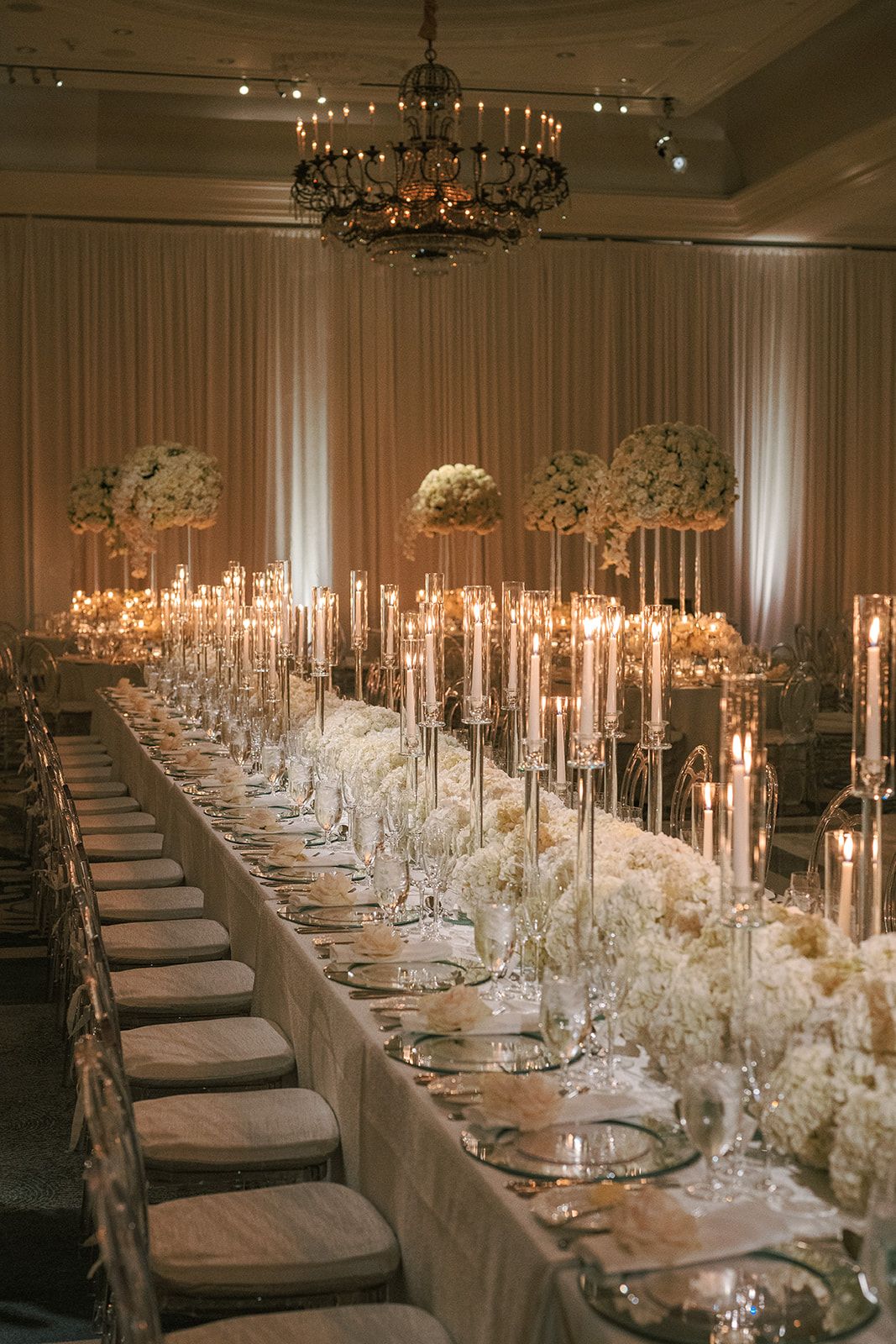
A wedding designer is a visual director. Their job is to take a vague idea in your head, say “warm, candlelit, a little bit Tuscan.” Then they turn it into a buildable plan vendors can price and execute. That means mood boards and a defined color palette. It covers a floral and greenery scheme, linen and tabletop selections, lighting design, a ceremony backdrop, and escort cards. Often it includes a to-scale floor plan showing where every farm table and lounge sofa lands.
The good ones think in dollars per guest, not just in pretty pictures. A designer who proposes 14-foot floral installations and imported chargers on a $30,000 total budget is not designing. She is daydreaming. A working designer will tell you the fix: swap full blooms for a mix of greenery and candles. That drops your floral line from $9,000 to $4,500 without gutting the look. They source rentals and negotiate with the florist. On setup day they make sure the tables match the render they sold you back in month two.

What a designer usually does not do: chase your DJ for a final invoice, build a minute-by-minute timeline, or cue your grandmother down the aisle. Design ends roughly where operations begin. That handoff is where couples get burned. The prettiest wedding on Instagram still needs someone making sure the cake arrives before the doors open. Someone has to confirm the shuttle driver has the right address.
One more thing designers own: the proposal itself. Expect a real deliverable, not a vibe. A strong designer hands you a 10 to 20 page deck. It shows a labeled floor plan and elevation sketches of the head table. You also get swatches for every linen and a rental list down to the salad fork. That document is what keeps the florist, the rental house, and the lighting tech building the same wedding instead of three different ones.
What a wedding planner actually does
A planner is the operations lead. Think project manager with a headset. They manage the budget spreadsheet, recommend and vet vendors, and read the contract fine print. That means force majeure, overtime rates, and the caterer’s final-count deadline. They build the master timeline, run the rehearsal, and quarterback the wedding day so you do not have to. When the shuttle is 40 minutes late or the officiant texts that he is lost, the planner handles it. You never hear about it.
There is a spectrum here. Full-service planning starts 9 to 14 months out and touches every decision. Day-of coordination, which is really more like month-of, tags in around the 4-to-6-week mark. It takes your existing plans and runs them. A full-service planner on a $50,000 wedding might run you $6,000 to $9,000. Day-of coordination in most mid-size markets sits between $1,200 and $2,800.
The unglamorous work is where a good planner pays for herself. She catches that your caterer’s contract requires a final headcount 10 business days out, not 7. That saves you a late-change fee. She confirms the venue’s certificate of insurance names the right entity. She builds a rain plan for the outdoor ceremony and a call sheet with every vendor’s cell number, arrival window, and load-in door. None of it photographs well. All of it is why the day runs on time.
Many planners have taste and will help you make aesthetic choices. But helping you pick a palette is not the same as designing the whole visual world of your wedding. A planner will happily coordinate the florist you found. A designer decides the florals should be blush garden roses in footed compotes, with taper candles at three heights. Then she makes it real on install day.
Wedding planner vs wedding designer: where the roles overlap
The wedding planner vs wedding designer confusion exists because the middle of the Venn diagram is huge. Every vendor draws the line differently. Plenty of full-service planners include “design” in their package. What that means ranges from a single Pinterest board to full creative direction with custom renderings. “Design” on a $2,500 partial-planning contract is not the same deliverable as “design” on a $15,000 luxury contract. Both use the word anyway.
Here is a clean way to sort it. If the deliverable is a decision, a timeline, a contract, or a vendor being managed, that is planning. If the deliverable is something you can photograph, a color, a flower, a linen, a lighting look, that is design. One person can absolutely do both. The strongest event design specialists also run tight logistics. But never assume the two are bundled. Read the scope of work line by line. Ask, in writing, who owns the floor plan, the rentals, and the day-of setup crew.

The practical failure mode looks like this. A couple hires a coordinator for $1,800 expecting a magazine-worthy room. Three weeks out, they learn nobody sourced the linens, styled the sweetheart table, or built a centerpiece plan. That was design work, and design was never in scope. The coordinator did exactly what she was paid for. The gap was in the hiring, not in her performance, and by then it is too late to fix cheaply.
What each costs in 2026
Pricing splits along the same line as the roles. Planners tend to charge a flat fee or a percentage of your total budget, commonly 10 to 15 percent for full service. Designers more often quote a flat design fee plus a markup on the physical goods they source. Some roll design into a package with a labor and install line. For context, The Knot’s Real Weddings Study puts the average U.S. wedding around $33,000. Planning or design fees sit on top of that number.
Rough 2026 ranges, understanding that a major metro runs 30 to 60 percent higher than a smaller market:
- Day-of or month-of coordination (logistics only): $1,200 to $2,800
- Full-service planning (logistics, no heavy design): $4,500 to $9,000
- Standalone design fee (concept, sourcing, install oversight): $2,500 to $8,000, before the actual flowers and rentals
- Combined planning and design, mid-market: $7,000 to $14,000
- Combined planning and design, luxury: $20,000 and up, often a percentage that lands well into five figures
The number that surprises couples most is the physical cost under the design fee. A designer’s $4,000 fee does not include the flowers, rentals, or lighting. Building the room can add $11,000 of florals, $3,500 of specialty rentals, and $2,000 of lighting on top. The fee buys the brain and the labor. The materials are their own line. A designer who skips that math early is setting you up for a bad conversation in month seven. Ask for a sample budget that separates the design fee from the goods before you sign. Watch how fast they produce one. A vendor who has done this a hundred times has the breakdown ready.
Do you actually need both?
Most couples do not need a separate designer and planner as two distinct hires. The wedding planner vs wedding designer decision comes down to three things. Those are your guest count, your budget, and how visually ambitious you are.
Say you are hosting 60 guests in a restaurant that already looks good. You probably need coordination and almost no design. The room is the design. Spend your money on a coordinator who keeps the night on the rails, and skip the standalone designer.
On the other end sits a 180-guest wedding in a raw warehouse or a bare tent. That is essentially a blank build. Everything the guest sees, the walls, the ceiling, the floor, the flow, has to be created from nothing. There a designer earns the fee ten times over. A bare tent alone can need $8,000 in draping and $6,000 in flooring and lighting. Add a full furniture rental order before a single flower shows up. Someone has to price that, source it, and stage it. That someone is a designer.
Budget is the other gate. A useful rule of thumb: if your total is under $25,000, you almost certainly want one person wearing both hats. A planner with solid taste plus a strong florist works too. A separate design fee eats a slice you cannot spare. Between $25,000 and $60,000, a combined planner-designer usually makes sense, or a full-service planner with design built in. Above roughly $75,000, splitting the roles across two specialists often produces a sharper result. Each does the thing they do best, and neither is stretched thin across two demanding jobs on one weekend.
The honest answer for the middle of the market is simple. You want one vendor whose contract clearly covers both functions. Not two separate hires, and not a coordinator you are quietly hoping will also design.
Questions to ask so you know which one you are hiring
The label on the website tells you almost nothing. The scope of work tells you everything. Before you sign, get clear written answers to a short list. “We handle design” means five different things to five vendors.
- Are you building the visual concept and floor plan, or executing a design I bring you?
- Who sources and orders the rentals, linens, and any specialty furniture?
- On setup day, is your team physically styling tables and installing decor, or only directing vendors?
- Does your fee include the cost of florals and rentals, or is that billed separately?
- Who owns the day-of timeline and cues the ceremony?
Watch for the tell in how they answer question four. A vendor who says florals are billed at cost plus 15 percent, with the florist’s proposal sent to you directly, is being straight. The one who waves it off with “we will figure out flowers later” will surprise you on the final invoice. Get the money split in writing before the deposit, not after.
If the design answers are vague and the logistics answers are crisp, you are hiring a planner, whatever the homepage says. If it is the reverse, you have a designer, and you still need someone to run the day. A vendor who answers all five confidently, and hands you a scope that names names and owns deadlines, is rare. That is the person who genuinely does both. Our how it works page shows how planners on the directory list their scope. You can compare apples to apples before a single call.
If you are a planner: should you offer design too?
For working planners, the wedding planner vs wedding designer line is a positioning decision with real revenue attached. Adding design is the fastest way to raise your average contract value. You are now billing for creative direction, and often taking a margin on sourced goods on top of your coordination fee. A planner who adds a full design service can move a $6,000 average booking to $12,000 or more. That happens without booking a single extra wedding.
The catch is that design is a genuinely different skill, and doing it badly is worse than not offering it at all. If you cannot build a floor plan to scale, read a room’s lighting, or negotiate rentals, do not slap “design” on your package. Charging more for a skill you lack backfires. Couples notice. The review that says “beautiful timeline, forgettable room” costs you future bookings. A cleaner path for many planners is to partner with a florist and a rental house you trust. Position yourself honestly as logistics-first with light styling, and refer heavy design out. Charge for what you actually deliver, and name it precisely in your contract so no couple assumes a service you did not sell.
Before your next consultation, rewrite your scope of work. A stranger should read it and know in 30 seconds whether you plan, design, or both. That single edit prevents more mismatched-expectation blowups than any amount of pretty portfolio work. If you want to be listed where couples already grasp the difference, join the directory and spell out your scope up front.