
You booked six weddings last year, worked roughly 70 hours on each one, and netted about $18,000 after expenses. That works out to around $43 an hour before taxes, less than the photographer you referred and less than the bartender at half your events. If that math stings, the problem usually is not your skill. It is your wedding planner pricing.
Most independent planners set their first rates by glancing at a competitor’s website, knocking off a few hundred dollars, and hoping the inquiries come. Then they spend three years trapped under that number. Your wedding planner pricing is the single highest-leverage decision you make in this business, and it is one of the few you can change without learning a new skill. Below is how to think about it like an operator, not like someone afraid to send the invoice.
Which wedding planner pricing model fits your service
There are three structures in wide use, and each one rewards a different kind of work. Pick the wrong frame and you will fight your own rates for years.
The flat fee is the most common for coordination and partial planning. You quote one number for a defined scope: $2,400 for day-of coordination, $4,500 for month-of coordination, $7,000 for partial planning. The couple knows their cost on day one, which lowers their anxiety and shortens your sales call. The risk is yours: if the scope creeps, you eat the extra hours.
The percentage model ties your fee to total wedding spend, usually 10% to 20% of the budget, and it is standard at the full-service and luxury end. On a $90,000 wedding, 15% is $13,500. The logic is that bigger budgets mean more vendors, more design, and more liability, so your fee should scale with the work. The downside is real: couples flinch when they feel like trimming the budget saves them money on you too, and some planners quietly inflate recommendations to protect their cut. If you use this model, cap it or set a floor so a tight $30,000 wedding still pays you a livable $6,000.
The hourly rate, typically $75 to $200 depending on market and experience, works best for consulting, a la carte help, and the planner who wants to sell expertise without owning the whole event. It is honest and it protects you from scope creep, but it caps your income at the number of hours in a week and it makes couples watch the clock.

Most established planners end up blending these. A flat fee for the core package, a percentage layer once a budget crosses a threshold, and an hourly rate for anything outside scope. Pick the base model that matches how you actually deliver, then bolt on the others as guardrails. That blend is what mature wedding planner pricing looks like.
How to calculate a number you can defend
Forget what the planner across town charges for a minute. Start from your own floor, because a price built on a competitor’s guess inherits their mistakes. This is the real heart of wedding planner pricing: a number you can trace straight back to your own costs.
Write down the true cost of running your business for a year:
- software, insurance, and association dues
- your assistant’s day rate and mileage
- an emergency kit you restock every season
- a website, a CRM, and card processing fees
- the unpaid hours you spend on marketing and admin
Call that your overhead. Then decide what you need to take home, and add the roughly 25% to 30% that income tax and the self-employment tax the IRS expects will claim. Now divide by the number of weddings you can realistically deliver well in a year, which for a solo planner is usually 12 to 20, not 40.
Here is a worked version. Say your overhead is $14,000, you want to take home $65,000, and taxes push the target to about $95,000 in revenue. If you can run 15 weddings at your standard of care, each wedding needs to gross roughly $7,267. That is your floor for a full-service client, not your aspiration, and every other line in your wedding planner pricing builds up from it. Anything below it means you are subsidizing the couple with your own retirement.
Then layer experience and demand on top. A planner three years in with a strong portfolio and a waitlist should sit well above the floor. A planner booking their first paid season might sit at the floor on purpose, treating the lower rate as the cost of building a reel and a review pile. Both are defensible. What is not defensible is charging $1,500 for a full-service wedding because you were scared to say a bigger number out loud.
What the market actually pays in 2026
Numbers help, so here are the ranges most planners are quoting this year. Treat these wedding planner pricing ranges as orientation, not gospel, because a planner in a major metro can charge double what the same service earns in a small market. For context, The Knot’s annual cost study put the average U.S. wedding near $33,000, and your fee has to make sense against that backdrop.
- Day-of coordination, which is really month-of in disguise: $1,200 to $3,500
- Month-of coordination with vendor confirmation and a built timeline: $1,800 to $4,500
- Partial planning: $3,500 to $9,000
- Full-service planning: $6,000 to $20,000, or 10% to 20% of budget
- Luxury and high-touch full production: $25,000 and up, frequently a percentage with a five-figure minimum
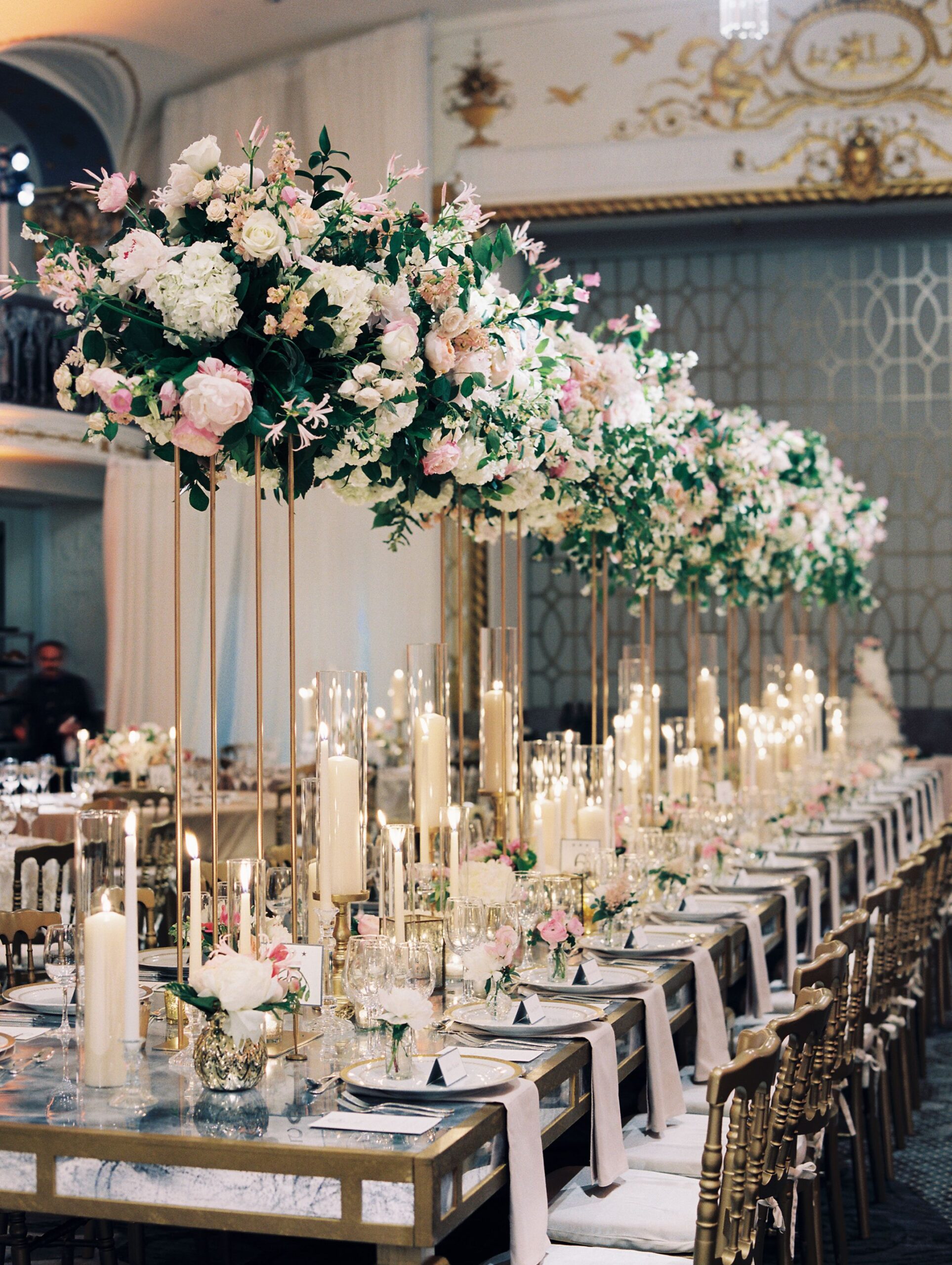
Where you land inside each wedding planner pricing band is mostly experience, market, and how much of the work the couple offloads to you. A $2,000 coordinator and a $3,500 coordinator may do similar tasks on paper. The difference is the $3,500 planner runs a tighter vendor-confirmation process, carries the liability insurance the venue actually asks for, and has enough booked weddings to turn down the ones that do not fit. Couples comparing quotes rarely see that, which is why your job during the sales conversation is to make the invisible work visible. A coordinator in Des Moines and one in Brooklyn can deliver the identical timeline and still quote $1,400 apart, purely on what their local market will bear.
How to package so couples upgrade themselves
Packaging is where wedding planner pricing stops being a single number and turns into a choice. A lone price tends to trigger a yes-or-no decision, and no is free. Three tiers turn the question into which one, which is a far better question for a couple to answer.
Build a good-better-best ladder where the middle option is the one you actually want to sell. Your entry tier covers coordination only, priced to be a real service but visibly thinner. Your middle tier adds budget management, vendor sourcing, and a design consultation, and it is the one you describe in the most detail. Your top tier adds full design, unlimited meetings, and on-site management of a larger team, priced high enough that it makes the middle look reasonable. This is anchoring, and it works because couples judge value by comparison, not in isolation.
Name what is included in plain terms and, just as important, name what is not. “Up to 12 vendor introductions” and “two in-person design meetings, additional sessions billed at $125/hour” protect you from the couple who treats a flat fee as an all-you-can-eat pass. The clearest contracts I have seen spell out the cutoff: revisions to the master timeline stop 14 days before the event, and any vendor added after the final walkthrough is billed separately. That one clause has saved planners hundreds of unpaid hours.
One more thing on packages: do not list every price on your website if you serve a wide range. A posted $1,500 number anchors every inquiry low, even the couple who would have happily paid $8,000. “Packages start at” plus a contact step lets you quote to the actual scope. It also helps to see how the planning categories in our directory describe tiers without ever posting a flat number.
How to raise your rates without losing your pipeline
The planners who stay underpaid are usually not bad at the work. They are afraid that a higher number means an empty calendar. The fix for stuck wedding planner pricing is to raise rates in steps and watch the only metric that matters: your booking rate.
If you close 9 out of every 10 couples who inquire, you are too cheap, full stop. A healthy close rate for a planner who is priced correctly sits somewhere around 40% to 60%. Saying yes to nearly everyone means your price is filtering out no one, and the couples who would never have questioned a higher fee are getting a discount they did not need. Raise your base by 15% to 20% on the next inquiry and see what happens. If you are still closing more than half, raise it again next season.

Protect your already-booked couples by honoring the rate they signed, and time increases to your booking cycle rather than mid-season. Tell your network the new floor so referrals arrive pre-qualified. Then build a deposit and payment schedule that respects your cash flow: a common structure is a 30% non-refundable retainer to hold the date, 40% at a defined midpoint, and the balance due 14 to 30 days before the wedding, never on the day itself when you are too busy to chase a check. If you take on destination work, front-load even more, because your travel and lodging costs hit before the event. Treat each season as a reason to revisit your wedding planner pricing rather than a number you set once and forget.
When to discount, and when to walk
Discounting is not always a mistake. It is a mistake when it is reflexive. A discount is a wedding planner pricing decision like any other, so make it on purpose. A planned cut can be a smart tool: an off-season Tuesday in February, a friend-of-a-past-client referral, or a couple whose wedding will photograph well enough to anchor your portfolio for a year. Decide the reason before you offer the number, and cap how many discounted slots you will take per season so they do not become your whole calendar.
The couples to walk away from are the ones who negotiate before they have signed anything, who treat your scope document as a starting point for subtraction, or who tell you three other planners quoted less. That last one is a tell. A couple shopping on price alone will not value the work you do at 11 p.m. when a vendor cancels, and they will be your most expensive client to serve. It is better to hold the date open than to fill it with someone who resents every invoice.
Keep a short script ready for the price objection, because it will come. Something like: “I understand the budget is real. My fee reflects the full timeline I build, the vendor team I manage, and the fact that I cap my season so your wedding gets my attention. If the package is more than works right now, the coordination tier covers the day itself, and we can talk about the rest later.” That answer holds your number without making the couple wrong for asking.
Pricing is a decision you revisit, not a number you set once
Good wedding planner pricing is not a number you find. It is a system you run: a floor built from your real costs, tiers that let couples choose up, a payment schedule that protects your cash, and a booking rate you actually watch. Each of those moves independently, so the rate that was right two seasons ago is almost never right today.
Make this a standing appointment with yourself. Sit down with last year’s calendar this week, total your real overhead, and divide by the weddings you delivered to find your true rate per wedding. If it comes in below your floor, reset your wedding planner pricing before your next inquiry lands, not after you have signed three more contracts at the old number.
The planners who earn well are rarely the most talented in the room. They are the ones who treat the price as a decision worth revisiting, who hold their number through the awkward pause, and who would rather keep a date open than fill it at a loss. If you want couples who already understand that planning has a real cost, list your services where they are looking for one.