
You found three planners through a friend, a Google search, and a venue’s preferred list. Two charge roughly the same. One quoted $4,500 and the other quoted $9,000 for what sounded like the same job. Before you sign anything, the right questions to ask a wedding planner will tell you which number is honest. The other one usually hides a second invoice arriving in March.
Most couples interview planners the way they interview a caterer. They ask about the price and the vibe, then book whoever felt warm on the call. Warmth matters, but it won’t protect you when a florist ghosts you twelve days out. It also won’t help when your venue’s “coordinator” is really a building manager who clocks out at 9 p.m. The questions below surface those gaps early, while you still have leverage. Your deposit isn’t paid yet, and that is your strongest moment.
Start With the Questions to Ask a Wedding Planner About Scope
The word “planner” covers three very different jobs. A lot of disappointment comes from booking one and expecting another. Ask directly whether they build your vendor team from scratch or take over a wedding you have already half-planned. A full-service planner sources and books every vendor, manages the budget, and runs design from the engagement onward. A full-service planning engagement usually starts 9 to 14 months out. It runs 12 to 18 percent of the total budget. For a mid-size wedding, that often means a flat fee of $6,000 to $15,000.
A day-of coordinator does almost none of that. They step in 4 to 6 weeks before the date. From there they confirm the vendors you already booked, build a timeline, and run the event itself. That is a real job, and it is worth $1,800 to $3,500. It is not the same product. If a planner quotes a low number, ask which of these three jobs that number actually buys. The honest ones will tell you flatly that day-of pricing does not include twelve months of vendor sourcing.
Pin down the boundary in writing. “Unlimited communication” sounds generous until you learn it means email only, with a 48-hour response window. Then you find out phone calls cost extra after the third one. Ask how many in-person meetings are included, whether venue walkthroughs count against that number, and where hourly billing kicks in. Most couples overspend here by assuming access they never confirmed.
How Is Your Fee Actually Structured?
Of all the questions to ask a wedding planner, this one gets rushed the most. There are three common pricing models, and each changes your incentives. A flat fee is the cleanest: you pay $7,500 and you know the number. A percentage of budget, usually 10 to 20 percent, scales with your spend. That means a planner who talks you into a $90,000 budget earns more than one who keeps you at $50,000. The incentive isn’t automatically a problem, but you should know it exists. Hourly billing, common for partial planning, runs $75 to $250 an hour, and it is honest only with an itemized log.
For context, industry surveys like The Knot’s Real Weddings Study put the average U.S. wedding well above $30,000. A percentage fee adds up fast at that scale. Ask the question nobody likes to ask: do you take commissions or kickbacks from the vendors you recommend? Plenty of planners do, and a 10 to 15 percent referral fee from a florist is standard in some markets. It is not corrupt on its own. It becomes a problem when it quietly steers you toward the vendor who pays the planner. The right pick is the one who fits your day, not their referral sheet. A planner who discloses this without flinching is showing you how they handle money in general.
Then get the deposit schedule in plain numbers. Most planners take 30 to 50 percent to hold the date, with the balance due 30 to 60 days out. Find out what is refundable and when that window closes. The three models break down like this:
- Flat fee: one fixed number, easiest to compare across planners.
- Percentage of budget: 10 to 20 percent, rising with every upgrade you approve.
- Hourly: $75 to $250 an hour, fair only with an itemized log.
Compare a few real quotes against the ranges on our pricing page. That tells you whether a number is high for your region or just high for this planner.
How Many Weddings Are You Running That Weekend?
This question separates a coordinator who will actually be present from one who treats your Saturday as one of three. On a peak June Saturday, a busy studio might have three couples all expecting the owner’s full attention. A planner running back-to-back weddings on the same date is splitting attention. More important, they are splitting their backup capacity. If their lead coordinator is at another event when your DJ’s gear dies, you are relying on whoever is left.
Ask how many weddings they book per month and per weekend in peak season. Ask whether your date is exclusive or shared. A solo planner who caps at one wedding per weekend is making a real promise about availability. A larger studio running four events on a single Saturday can be excellent. That only holds if they staff each one properly. You also need to have met the person leading yours, not just the owner who sold you.

Follow it with a staffing question. For a 150-guest wedding, you want at least two coordinators on site: a lead and an assistant. One person cannot cue the processional, manage the caterer’s timing, and calm a tipsy guest at the same moment. If the quote includes only one body for a large guest count, that is a thin operation. Ask what the second-coordinator add-on costs, because adding it later always costs more.
Who Actually Runs My Wedding Day?
At a larger company, your charming salesperson is rarely the one on the floor that day. Ask by name who will lead your event. Find out when you will meet them and how many weddings they have personally run. A planner with three years and 60 weddings behaves differently under pressure than someone in their first season. There is nothing wrong with a newer coordinator, as long as you are not paying senior-lead prices for them.
This is also where you find out about the bench. What happens if your assigned planner gets the flu, breaks an ankle, or has a family emergency the week of your wedding? A serious operation has a documented handoff. That means a shared planning file and a backup coordinator who has reviewed your timeline. It also means a contract clause naming a substitute. A planner whose only answer is “that won’t happen” is telling you they have no plan. It does happen.
For destination weddings the stakes climb. A destination planner needs local relationships, not just a passport. Expect them to charge 18 to 25 percent of budget, or a flat fee north of $8,000, partly to cover travel and on-the-ground logistics you cannot manage from home. When a rental company in another country no-shows, your planner’s standing with regional vendors is the only thing that fixes it fast. Ask how many weddings they have run in your specific location. Ask whether they have a local partner on the ground.
What Happens When a Vendor Cancels or It Rains?
Some of the sharpest questions to ask a wedding planner are about failure. Good planners think in contingencies, and pressing on failure modes tells you whether yours does. Pose a specific scenario. My caterer goes out of business 60 days before the wedding: what do you do? You want a concrete sequence, not reassurance. The real answer sounds like this: we keep backup vendors in every category. We already know which ones have your date open. Last spring we moved a catering contract on three weeks’ notice.
Weather is the easy one to test. For an outdoor wedding, ask what the rain-call timeline looks like and who makes it. A strong answer has a hard decision point, say 10 a.m. the morning of. It names a tent vendor on standby with a 48-hour hold, and it says plainly who eats the tent cost. If the plan is “we’ll keep an eye on the forecast,” there is no plan.
Ask about the money side of a cancellation too. If a vendor refunds a deposit, does that flow back to you or get absorbed into a rebooking fee? If the planner sources a replacement at a higher rate, who covers the difference? None of this is hypothetical for a 2026 wedding, where venue and vendor turnover has stayed high. Our FAQ covers how vendor disputes usually get resolved, but your planner’s specific answer matters more than the general case.
Can I See a Full Timeline and Talk to Recent Couples?
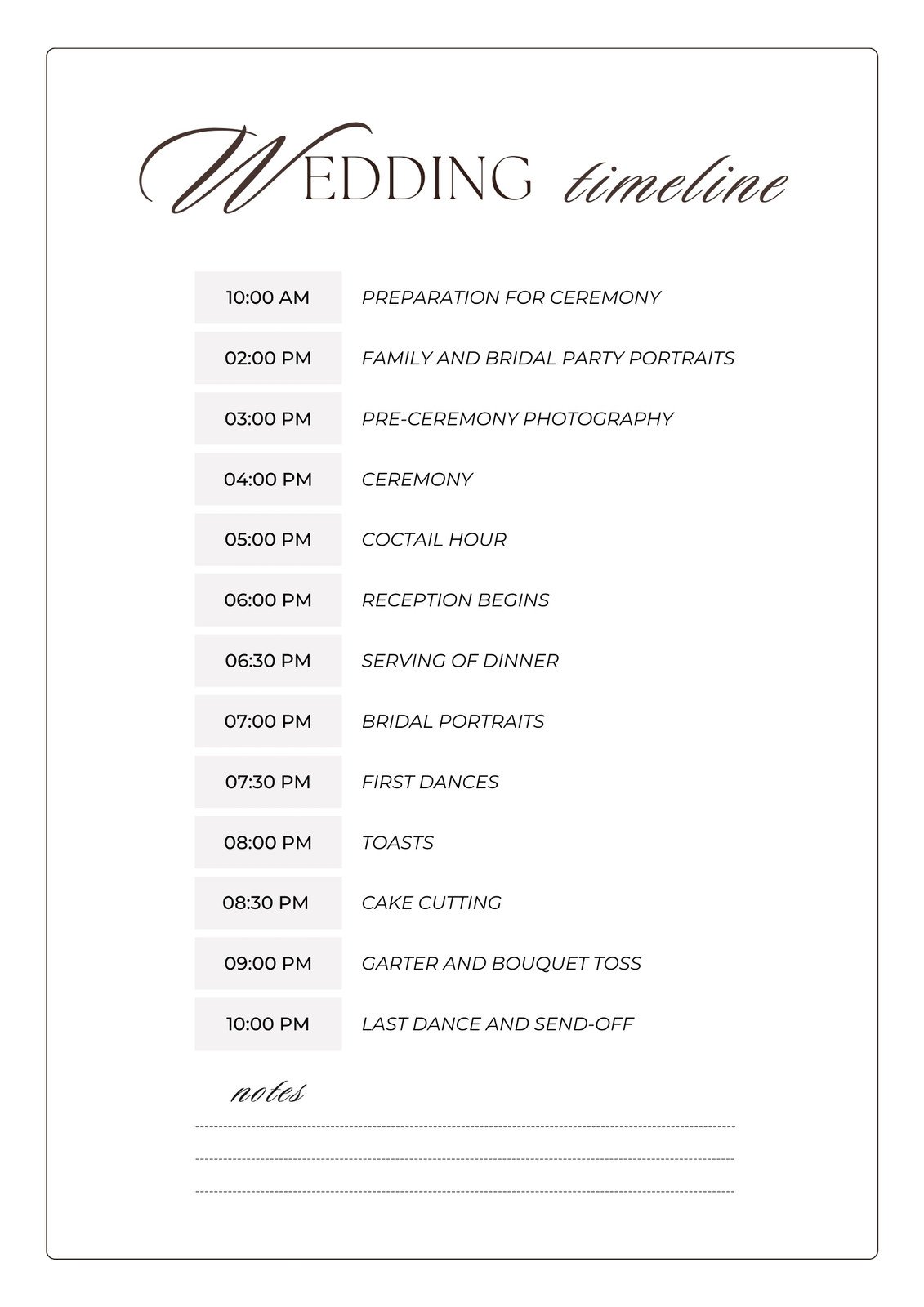
Ask to see a real wedding-day timeline from an event they ran in the last year, with the names redacted. A genuine timeline is granular. It has a 2:15 p.m. hair-and-makeup buffer, a 4:40 first-look window, a 6:05 grand-entrance line, and named vendor arrival times. If you get a vague one-page outline with “ceremony” and “reception” as the only anchors, that planner improvises on the day. Improvisation is where things slip.
Then ask for references from two couples whose weddings happened in the last six months, not curated testimonials. Call them, and keep the questions pointed:
- What went wrong on your day, and how did the planner handle it?
- Did the final invoice match the original quote?
- Was your lead coordinator the same person who sold you the package?
Every wedding has a problem. What you are listening for is whether the couple even knew about it. The best sign is a couple who says something broke, but they only heard about it afterward. The planner absorbed it before it reached them.
One more request before you hang up: ask the planner directly for two recent couples in your guest-count range, not their three flashiest weddings. A 300-guest ballroom reference tells you little if your event is a 70-person backyard dinner. Matching scale matters more than matching Instagram polish.
What Is Actually in the Contract Before I Sign?
The contract is where the warm sales call meets reality, so read every clause. Look first at the cancellation and postponement terms. After 2020, most planners added a postponement clause. Find out how many times you can move the date, within what window, and whether the deposit transfers or resets. A fair clause lets you postpone once within 12 months, with no penalty beyond rebooking-driven cost changes.
Check the force majeure language, the liability cap, and the payment schedule. Many planner contracts cap liability at the total fee you paid. That is standard, but you should know it going in. Look for whether the contract names your specific lead coordinator or only the company. An unnamed contract lets them swap in anyone. Confirm the agreement lists exactly which services are included. “Full planning” in conversation and “full planning” on paper are sometimes different scopes.
These are the questions to ask a wedding planner that protect you after the deposit clears. The answers should be in writing before any money moves. If a planner resists putting a verbal promise into the contract, treat that as the answer. A planner who runs a clean business will walk you through the document line by line. They have learned that the couples who read the contract are the easiest ones to work with.
Before your next call, write down your guest count, your real budget number, and your three non-negotiables. Then ask each planner to price that exact scope. The quotes that come back will tell you who is selling a number and who is selling a wedding. They reveal it faster than any pitch. The best questions to ask a wedding planner all point to the same thing: proof. See how it works to compare planners side by side on the details that matter.