
You want to get married on a cliff in Big Sur with eight people and a bottle of good wine, and you keep reading that eloping is the cheap option. Then you ask a planner for a quote, it comes back at $6,800, and you wonder what you missed. Here is the short answer. An elopement planner is not pricing the ceremony. They are pricing a logistics problem in a place you do not live, usually with permits, weather windows, and vendors you have never met.
The elopement planner cost in 2026 runs anywhere from about $1,500 for light coordination to $12,000 or more for a fully produced, multi-day adventure elopement in a remote spot. That is a wide band. The number you land on depends far less on your guest count than on three things: where you are going, how much of the day the planner is physically running, and whether they are sourcing vendors in a market you cannot reach yourself.
What you actually pay for elopement planning in 2026
Let me give you the honest ranges, because “it depends” helps nobody build a budget.
Light coordination runs $1,500 to $3,000. At that level a planner builds your timeline, recommends a location and a handful of vendors, and stays reachable by phone on the day. You are doing most of the legwork yourself. This is the elopement equivalent of day-of coordination, and it fits couples who already know the area and just want someone keeping the pieces from colliding.
Mid-tier full planning generally lands between $3,500 and $6,500. Here the planner sources every vendor, handles permits, builds a detailed day-of schedule, and is on site running the timeline. This is the most common package couples actually buy. It is also where most photographers-turned-elopement-planners price their signature offering.
Then there is the produced adventure elopement: a helicopter to a glacier, a two-night stay, a private chef, a hair and makeup artist driven three hours to a trailhead. Those packages start around $7,000 and climb past $12,000 fast. At that tier your elopement planner cost also buys a location scout and a risk manager, because someone has to know what happens if the weather turns at 9,000 feet.

One thing worth flagging early: plenty of “elopement packages” sold as all-in are really planning-plus-photography bundles run by photographers. That can be great value, but read what is included. A $4,500 package covering photography, a timeline, and location scouting is a very different animal from a $4,500 planning fee that sits on top of the photographer, florist, and officiant you still have to pay.
Why eloping is not automatically cheap
The fantasy is two people, a stranger to sign the license, and a $200 total spend. That version exists, and if it is what you want, you do not need a planner. But the elopements people actually book tend to accumulate cost in ways a traditional wedding does not.
Remote locations charge for access. A special-use permit in a US National Park runs $50 to $300 depending on the park and the site. Popular spots like Yosemite’s Glacier Point or the Delicate Arch area cap the guest count and require applications months out. Some sites book a year ahead in peak season. Your planner knows which permits exist, which ones are functionally impossible to get in July, and which ranger district actually answers the phone.
Vendors charge travel and minimums. A florist willing to drive two hours to a coastal bluff bills for the drive, and often carries a $500 to $800 minimum for anything delivered off-site. A hair and makeup artist coming to a mountain cabin at 5 a.m. bills a travel fee and an early-call surcharge. None of these are the planner fee. They are the real cost of getting wedding-quality service to a place that is not a ballroom.
Small guest counts do not shrink fixed costs. Whether you have zero guests or twelve, the photographer still shoots a full day, the officiant still charges their rate, and the private dinner still carries a per-head minimum. The savings from eloping come from cutting the 150-person catering bill and the venue rental, not from the day being simpler to produce.
Here is where an elopement budget quietly fills up, and almost none of it is the planner fee:
- Marriage license: $35 to $115 depending on the county, plus a waiting period in some states.
- Officiant: $250 to $600 for a professional, more once they have to travel.
- Permit and site fees: $50 to $300 for public land, higher for private venues.
- Vendor travel and minimums: often $300 to $900 once you are off the beaten path.
- A witness or two if your license requires them and you brought nobody.
What is included at each price tier
The word “package” hides a lot, so here is roughly what separates the tiers in practice.
At the $1,500 to $3,000 coordination level, expect a planning questionnaire, two or three vendor recommendations, a location suggestion, a written day-of timeline, and phone availability. The planner is not usually on site. You confirm your own vendors and sign your own contracts. If the officiant is late, you are the one calling.

At the $3,500 to $6,500 full-planning level, the planner sources and books vendors on your behalf, handles the permit application, coordinates travel logistics, and builds a detailed schedule down to the golden-hour ceremony window. They are also physically present to run the day. Many planners at this tier cap the number of elopements they take per season, which is part of why the fee holds. This is close to what a full-service planner delivers for a large wedding, compressed into an intimate event.
At $7,000 and up, you are paying for production. Location scouting trips, sometimes done in person before your date. Backup-location planning for weather. Coordination of specialty vendors like a helicopter charter, a permit for a commercial shoot on protected land, a chef, transportation, and lodging blocks. Some planners at this level roll photography and videography into the number, which is why a $10,000 package can feel more reasonable than it first sounds once you unbundle it.
A useful gut check: if a quote sits dramatically below the range for what you are describing, ask exactly which vendors are inside the fee and which you pay separately. The gap is almost always vendor costs that got left out of the headline number.
How location changes the number
Where you elope moves your elopement planner cost more than anything else, and it moves it in two directions at once: the planner fee and the vendor ecosystem around it.
An elopement in a city with a deep vendor market, say Santa Fe or Asheville, is cheaper to plan because the planner has florists, officiants, and photographers fifteen minutes away who compete for the work. A planner might charge $3,500 to run a beautiful half-day elopement there because the logistics are genuinely manageable.
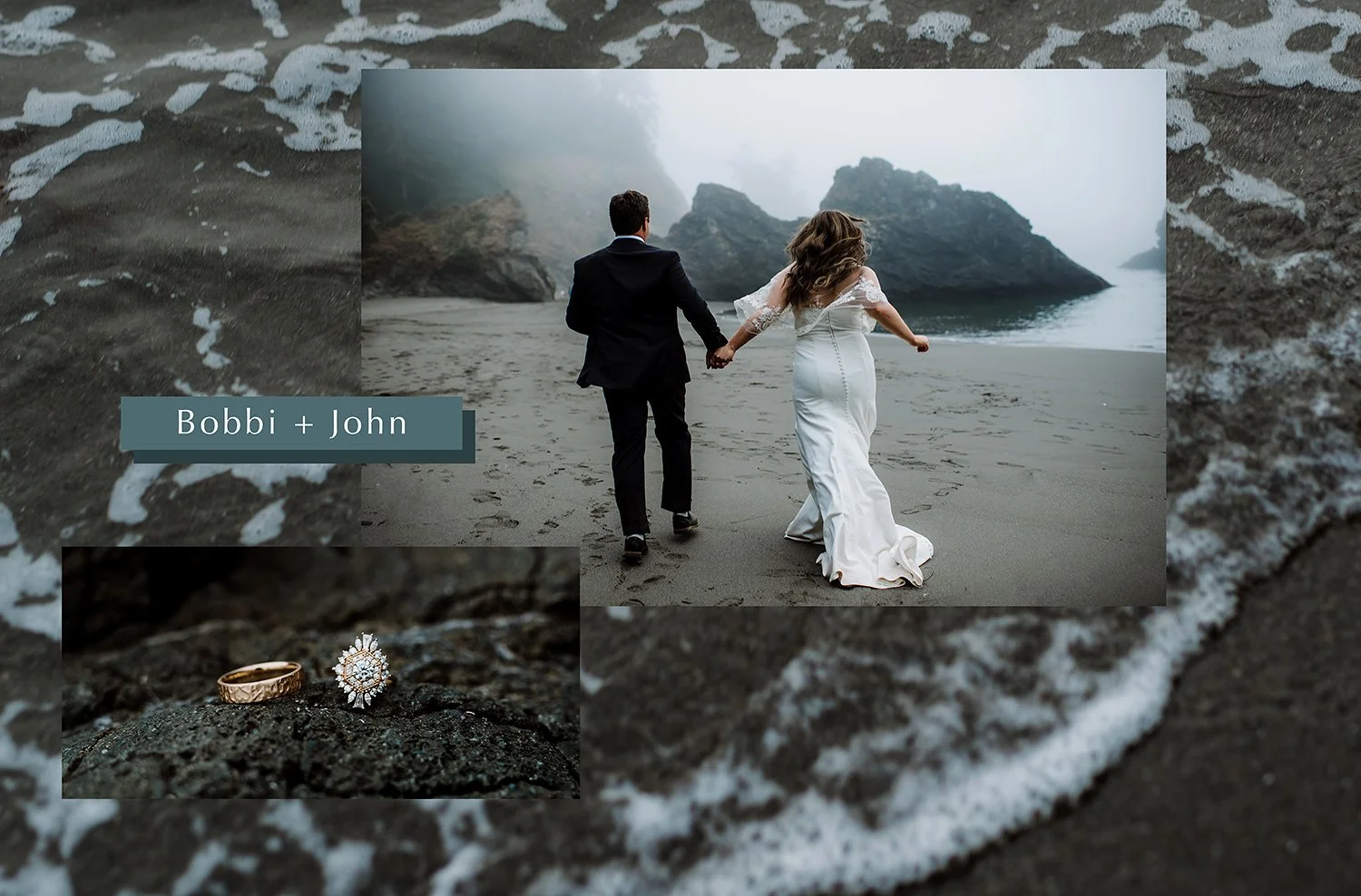
Take the same two people to a fjord in Norway or a black-sand beach in Iceland and the destination elopement fee climbs. Now the planner is coordinating across time zones, working with vendors who bill in another currency, and building in buffer for the fact that a delayed flight can blow up the entire day. Destination planning commonly runs $4,000 to $9,000 in planner fees alone, before a single vendor is paid. Add the planner’s own travel if they are accompanying you, which some do and some price as a separate line at $150 to $250 per hour plus expenses.
Domestic adventure spots sit in between. The Dolomites, Patagonia, and Banff are pricier to plan than a Sedona red-rock ceremony, not because the ceremony differs but because access, permits, and weather risk are harder. Ask any planner who has run a sunrise elopement above the treeline how many backup plans they carry. The good ones carry three.
Deposits, payment schedules, and cancellation terms
The money question that catches couples off guard is not the total, it is the timing. Elopement planners, like most in the trade, want a deposit to hold your date, and that deposit is almost always non-refundable.
A typical structure: a 30% to 50% retainer to book, the balance due 30 to 60 days before the date. On a $5,000 package that is a $1,500 to $2,500 payment you cannot get back if you change your mind. That is not a scam. It is how they hold the date against other inquiries. But you should see it written plainly in the planner’s contract before you sign, along with what happens if you postpone versus outright cancel.
Read the reschedule clause specifically. Weather is a real risk for the exact spots people elope in, and a good elopement contract addresses it. Some planners let you move the date once within twelve months at no extra fee. Others charge a rebooking fee of a few hundred dollars. A few build a bad-weather backup location into the original scope. The force-majeure language matters more here than it does for a hotel ballroom, because your “venue” might be a trail that closes for a rockslide.
Also confirm who holds the vendor contracts. If the planner books the photographer under their own name, a cancellation flows through them and their terms. If you contract each vendor directly, you inherit each vendor’s individual deposit and refund policy, and those can differ wildly. One photographer’s 25% refundable retainer sitting next to a florist’s 50% non-refundable deposit is a normal, messy reality of piecing an elopement together.
When you do not need an elopement planner at all
I will argue against my own trade for a paragraph, because plenty of couples genuinely do not need one.
If you are marrying somewhere you know well, with fewer than a handful of guests, no permit requirements, and vendors you can book with a couple of emails, you can run it yourself. A courthouse-plus-dinner elopement in your own city does not need a $4,000 planner. Neither does a backyard ceremony with a friend officiating. The value of a planner scales with the complexity and the unfamiliarity, not with the fact that you are calling it an elopement.
Here is where the fee earns itself: an unfamiliar location, a permit you would never find on your own, a timeline that has to hit golden hour at a spot forty minutes from the nearest road, or vendors in a market where you have no idea who is reliable. If any two of those are true, the planner is buying you back the weeks you would otherwise spend cold-emailing strangers, plus the risk of a day that unravels because nobody was watching the sky.
A middle path exists too. Some planners sell a one-time consulting call, $150 to $400 for ninety minutes, where they hand you a vendor list, flag the permit you need, and sanity-check your timeline. For a couple who wants to DIY but does not want to fly blind, that is often the highest-value money in the whole budget. If you are a planner reading this, that consult is also one of the easier ways to find elopement clients who later upgrade to full planning.
How to get your real elopement planner cost
Before you ask anyone for a quote, write down three things: where you want to marry, how many people are coming, and which parts of the day you flatly refuse to manage yourself. Hand a planner those and you will get an honest elopement planner cost instead of a package price built for someone else’s wedding.
One couple I talked through it wanted a Sedona sunrise ceremony with ten guests and dinner in town. Their first quote came in at $6,500 full-service. Once they admitted they really only needed help with the permit and a day-of lead, a partial-planning arrangement at $2,800 covered it, and they spent the difference on a better photographer. Scoping the job first is what freed up that money.
Then pressure-test the quote against a short list. Which vendors are inside the fee and which do you pay directly? Is the planner on site the whole day, or reachable by phone? What is the deposit, and is any of it refundable? Is there a weather or reschedule clause, and who eats the cost if the trail closes? Does the number include the planner’s travel, or is that a separate line?
The couples who overpay are the ones who bought the pretty bundle without asking those questions. The ones who get it right scoped the job first, then found the planner who fit it. Do that, and the elopement planner cost stops being a mystery number and starts being a line item you can actually defend.