
You booked a photographer at $4,800. You added a live band at $6,500 and a day-of coordinator at $2,400. Three weeks out, all three send the same reminder. Their contracts require a hot meal for every crew member. The caterer wants a final vendor plate count by Friday. Nobody flagged this line item when you signed. Now you are staring at a spreadsheet, wondering whether the second shooter counts.
Do You Feed Wedding Vendors? The Short Answer Is Yes
You feed wedding vendors because the contracts say so. This is not an etiquette debate. Open your photographer’s agreement and find the clause. It usually reads: “Client provides one hot meal per photographer and assistant, served when guests eat.” Videographers, bands, DJs, and planners carry near-identical language. A crew works from a 1 p.m. getting-ready shoot to a midnight last dance. That is an eleven-hour day, and they cannot leave to grab dinner.
The clause hides in more contracts than couples expect. These vendors almost always require a fed crew:
- Photographers and any second shooter
- Videographers and camera assistants
- Bands, DJs, and their sound techs
- Day-of and full-service planners plus assistants
Most couples miss the language at signing. It sits below the payment schedule and the cancellation terms. Then it surfaces during final headcount season. That is usually the same week your caterer wants numbers. Read every contract now and highlight the meal wording. Do not wait until the wedding week. If a contract says nothing about meals, ask the vendor directly. Skipping a required plate can put you in technical breach.
Some contracts get specific about timing, too. One common line reads: “Meal to be served no later than the start of dinner service.” That protects the vendor from being fed at 10 p.m., after everything is cold.
Which Vendors You Actually Feed, and Which You Don’t
The rule for which wedding vendors you feed is simple. Anyone working on site through a meal eats. That covers your photographer and any second shooter. Your videographer and their assistant eat too. So does every musician, plus the DJ and their tech. Your planner and their assistants count as well. If hair and makeup stays for a touch-up or a dress change, they eat. An officiant who stays for dinner is a guest and gets a full plate.
You skip the vendors who drop off and leave. The florist delivering arrangements at 2 p.m. does not count. Neither does the rental crew setting up chairs or the baker dropping the cake. The off-the-clock driver between runs is out too. The gray area is trickier. Think of the shuttle driver waiting on site for four hours, or the rental team doing a same-night strike. My rule is blunt: if someone is present during dinner, they get a plate. I would rather over-order by one than leave a person hungry.
When unsure, just ask the vendor if their team will be there at dinner. A working day-of coordinator builds this list and confirms every headcount. That is one of the quieter reasons couples hire one. A good coordinator will also email the vendors for you, so you are not chasing headcounts two weeks out. Still deciding whether the help is worth it? Our breakdown of month-of coordination shows what a coordinator handles in the final weeks.

What a Vendor Meal Costs in 2026
Budgeting to feed wedding vendors is a real line item. Caterers price it two ways. Some charge the full guest plate. In 2026 that commonly runs $85 to $175 per person at a mid-range catered wedding. Most caterers offer a discounted vendor rate instead. It usually lands between $25 and $55 a meal. The vendor plate skips the passed appetizers, the plated service, and the bar.
Run the math. Eight vendor meals at a $40 rate is $320. That is small against a $45,000 budget. It is still big enough that you should not order full guest plates by accident. For context, The Knot’s annual cost study ranks food and drink among the largest line items couples pay. Most couples overspend here by defaulting to guest plates. A single email would have secured the vendor rate.
Ask your caterer to quote the vendor rate directly. Confirm what the plate includes. A few venues with in-house catering will not discount at all. There, eight full plates at $110 becomes $880. That surprise belongs in your budget spreadsheet in month three, not on the final invoice. Running the numbers yourself? The pricing and planning guides on our blog help you slot this cost where it belongs.
One clarification couples ask about: meals are separate from tips. A required hot meal is a contract obligation, not a gratuity. You still tip your photographer, band, and coordinator on top of feeding them. Feeding the crew is table stakes; the tip rewards great work. Budget both, and never treat the plate as a substitute for a real gratuity.
Hot Meal vs Boxed Meal: What the Clause Actually Requires
The word “hot” in a meal clause carries real weight. A photographer with a hot-meal clause is telling you something specific. A cold turkey sandwich off the leftover tray does not satisfy the contract. This became a sore point for a reason. Some caterers, and some budget-conscious couples, default to a cold box for the crew. If the contract says hot, that cold box is non-compliant. The vendor is within their rights to flag it.
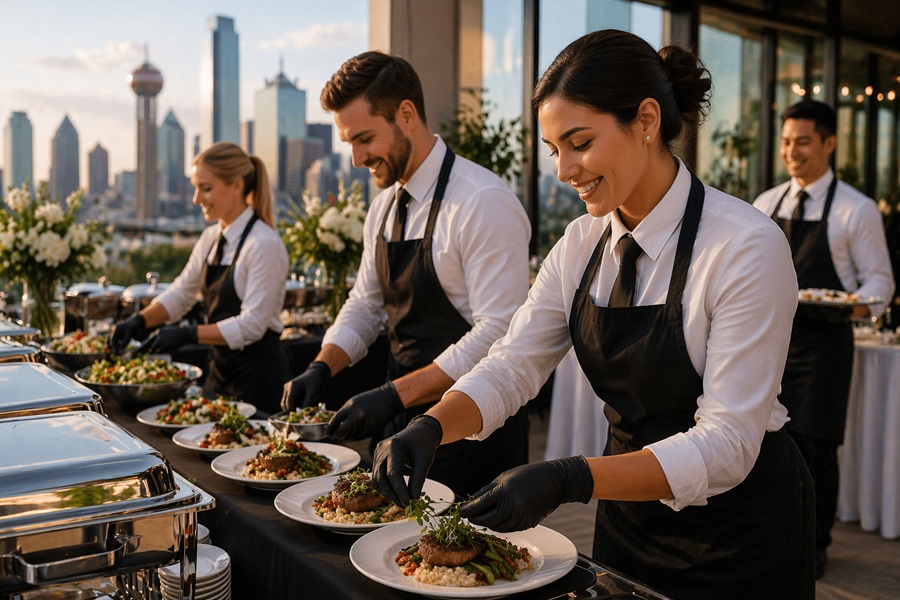
The crew does not need your exact plated entree. A hot vendor meal is a simpler take on the menu. Think the same protein and a starch, plated in the kitchen, no appetizer course. The goal is to feed wedding vendors as well as your guests, minus the frills. Skip the passed canapes and the open bar. Ask your caterer for a dedicated hot vendor option, and get it in writing.
Then nail down dietary needs. Ask each vendor if anyone is vegetarian, vegan, or has an allergy. Pass those specifics to the caterer with the count. Vegan and gluten-free requests have climbed in recent years, so do not assume the standard plate fits every crew member. One wrong plate for a shellfish allergy is a real problem. You do not want to discover it at 7 p.m. with the kitchen slammed.
When Vendors Eat: Timing That Protects Your Photos
Feed your vendors when you eat, not after your guests finish. Couples get this wrong more than anything else, and it costs them photos. Your photographer will not shoot you mid-bite. So dinner service is their window to sit down. A crew fed during your meal is back on their feet for toasts and the cake cutting. Make them wait until the end, and you get a tired photographer with cold food during your first dance.
Here is a timeline that works. Dinner starts at 6:30 p.m., and the captain plates vendor meals at 6:35, right after the head table. Your photographer and videographer finish eating by 6:50. By 7:10 they are shooting toasts again, when the best man stands. Nobody misses a moment, because the crew ate on your clock, not the guests’.
The mechanics are easy once you plan for them. Your coordinator or the caterer’s captain plates the vendor meals when the head table is served. They seat the crew nearby but out of the guests’ sightline. A side room or a reserved table near the kitchen works well. Build this into the reception timeline so nobody improvises at 8 p.m.
Running a wedding without a planner? This detail is exactly the kind that slips through. It is one reason to understand how coordination actually works before you skip it. Vendors will not remind you until they are hungry. By then, your timeline is already moving.

How to Count Vendor Meals Without Over- or Under-Ordering
Getting the number right when you feed wedding vendors starts with asking, not guessing. Two weeks out, email every vendor working through dinner. Ask exactly how many people from their team will be there. Photographers often bring a second shooter you never booked directly. Bands arrive with a sound tech. A planner brings one or two assistants for a bigger wedding. The number in your head runs low almost every time.
One real example: a couple ordered 4 vendor meals, and 6 people showed up. The photographer’s second shooter and the band’s two techs were never counted. The caterer scrambled two extra plates, and it worked out that night. Do not rely on that. Ask for exact numbers, and add a buffer of one when a vendor is vague.
Add the real figures to your catering count as a separate line. That way the caterer preps vendor plates, not guest plates. A clean way to track it:
- Photographer and second shooter: 2
- Videographer and assistant: 2
- Band or DJ plus tech: ask for the exact crew size
- Planner and assistants: 1 to 3
- Hair and makeup, if they stay for the reception: ask
Give the caterer this list in writing at the final headcount deadline, usually 7 to 10 days out. Never fold vendor meals into your guest count. That inflates your per-guest bar and rental math. A planner running your full-service planning reconciles this during final counts. Self-managing? Own the number and confirm it with the caterer yourself.
What About Drinks, Breaks, and Other Vendor Needs
Meals are the headline, but smaller obligations ride alongside them. Most vendors expect water and non-alcoholic drinks all day. That matters most at an outdoor summer wedding, where a photographer hauls gear in ninety-degree heat. The contract rarely spells this out. Still, a pitcher of water and a place to refill keeps the crew going. Vendors do not drink on the job, so you are not stocking the bar for them. You are just keeping them hydrated.
A vendor comfort setup costs almost nothing:
- A cooler of water and a stack of cups by the vendor table
- A few sodas or iced teas for the DJ booth and photo team
- A shaded or indoor corner to stash gear and cool off outdoors
Longer events sometimes include a break clause. A band contract may grant a fifteen-minute break after a continuous set. During it, a DJ or a house playlist keeps the room going. Read that clause next to the meal clause. Then your timeline accounts for it, instead of fighting it at 9 p.m.
One more courtesy pays off: a spot for coats, camera bags, and instrument cases. A photographer carries two camera bodies and a lighting bag. Nobody wants to stack $8,000 of gear by the dance floor. Point them to a locked side room when they arrive. You just removed one more stressor from a very long day.
None of this is expensive or complicated. But it separates a crew that feels looked after from one counting down to the contracted end time. The couples who get the best final hour usually earned it. They treated their vendors like people all day, not just at the plate.
What Happens If You Skip Feeding Wedding Vendors
Skipping the meal turns a small oversight into a real problem. On the contract side, a missing hot meal is a breach. No photographer will sue you over dinner, but they can note it. On the practical side, a crew that has not eaten in eight hours starts making quiet choices. Energy drops for the reception. The end time gets read more strictly. That extra fifteen minutes you hoped for? Less likely. Hungry vendors do not stay late.
The reputational cost is quieter but lasts longer. Vendors talk to each other and to future couples. WeddingWire’s planning resources treat a vendor meal as standard in photography and entertainment contracts. Ask around, and you will hear the top complaint planners have about clients. It is not late payment. It is not being fed.
Want your team giving their best through the last dance? Feeding wedding vendors on time, with a proper hot plate, is one of the cheapest high-return moves in the budget. Pull up your three biggest vendor contracts today. Find the meal clause in each. Then email your caterer this week to lock in a hot vendor rate and a plate count. That one afternoon of admin kills the most predictable week-of surprise on your list.