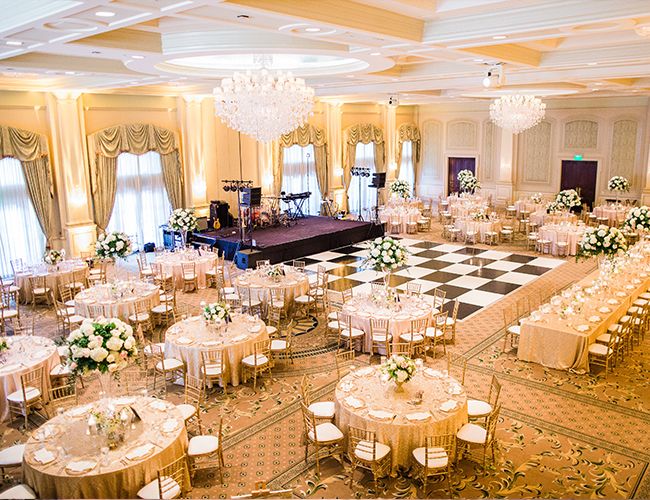
A venue quotes you $18,000 as the minimum for a Saturday in September. The sales manager says it basically covers dinner for 120 guests. Then the banquet contract arrives. A 24% service charge and 8.25% sales tax stack on top, and your real number is closer to $24,100. The wedding food and beverage minimum is the most misread line in any venue contract. It drives more of your final budget than the site rental fee, the photographer, and the florist combined.
My honest take after a decade of reading banquet contracts: the minimum itself is rarely the problem. The problem is that nobody explains what stacks on top of it. Or what the venue will quietly refuse to count against it. Get those two answers in writing, and a wedding food and beverage minimum becomes a budgeting tool, not a trap.
What a Wedding Food and Beverage Minimum Actually Is
A food and beverage minimum is a spending floor, not a price. The venue is telling you the least you can spend on catering and bar before they will hold your date. Hit it and the number vanishes into your bill. Fall short and you pay the gap anyway, usually relabeled as a room rental charge.
It is not your guest guarantee. That is the headcount you lock in 72 hours out and pay for whether those people show up or not. It is not a deposit either. And it usually sits separate from the site rental fee. Plenty of venues will fold rental into the minimum on a slow date, if you ask directly.
Minimums show up at hotel ballrooms, country clubs, private dining rooms, and estates tied to an exclusive caterer. They rarely appear at raw venues with open catering, at barns, or in backyards. That is a large part of why couples with tight budgets end up there.
Real numbers from 2026 contracts: $6,500 for a Friday at a suburban country club. $14,000 to $22,000 for a Saturday at a mid-tier hotel ballroom in a secondary market. $45,000 and up for a Saturday in a downtown Chicago or Manhattan ballroom. The per-plate math behind those figures runs $95 to $145 for a plated dinner in most markets. In expensive ones it is $165 to $260, and a four-hour open bar adds $32 to $65 per head. For context, The Knot’s Real Weddings Study puts average catering spend near $80 per guest nationally. That gap shows how far above average a ballroom wedding food and beverage minimum really sits.

How Venues Set the Number: Season, Day, and Room
Minimums are a grid, not a single figure. Most sales managers will show you the whole grid if you ask for it in writing. A typical hotel in a four-season market prices peak Saturdays from May through October at 100%. Fridays land at roughly 60 to 70% of that, and Sundays at 40 to 55%. January through early March goes for whatever keeps the lights on.
One property I book regularly runs $24,000 on a June Saturday and $15,000 on the Friday before it. The Sunday after is $9,500, and any February date outside Valentine’s weekend is $7,000. Same room, same food, same banquet team. If your date is genuinely flexible, that grid beats every negotiating tactic in this article.
Room size drives the rest. Venues that can split a ballroom assign a minimum per section. A 90-guest wedding in a half ballroom might carry $11,000, while the full room carries $26,000. Holiday weekends get their own tier, and it is usually higher, not lower. The venue knows demand is thin, but so is their staffing appetite.
Price in one 2026 wrinkle. At most full-service properties, the wedding food and beverage minimum has climbed 10 to 20% since 2023. Food cost and banquet labor drove that, not demand. A venue you toured in 2024 will not honor that quote, so do not waste a Saturday on a grid you have not seen this year. If you are planning from a distance, work with a destination wedding specialist. They usually have last season’s actual contracts from the properties on your list, which beats any published starting-at number.
The Math Nobody Shows You: Service Charge and Tax
Couples lose control of the budget right here. The minimum is almost always calculated on food and beverage before service charge and before tax. Everything after that is additive.
Run the $18,000 example all the way through. Service charge at 24% adds $4,320. Sales tax at 8.25%, applied in most states to the service charge as well as the food, adds $1,841. Your check is $24,161 for a minimum presented to you as $18,000. That is a 34% jump, and it is the single most common reason a wedding budget breaks in month four.
Service charges in 2026 typically land between 22% and 26%. Ask one specific question. Does any portion of that charge go to staff as gratuity, or is it an administrative fee the house keeps? In many contracts it is the latter. The banquet captain and servers are then paid separately. Budget another $200 to $500 in cash for the captain, plus $50 to $100 per server. Some contracts split it out honestly, something like 20% gratuity to staff and 6% administrative fee. Those are the properties I trust.
Confirm one more thing: does the venue treat a bartender fee or cake cutting charge as taxable food and beverage? The answer moves your effective spend by a thousand dollars without changing anything about the party.
Put the stacked number at the top of your budget spreadsheet, never the headline. A wedding food and beverage minimum of $18,000 is really a $24,161 line item. Treat it as anything less and you end up cutting the band in April.
What Counts Toward the Minimum and What Doesn’t
Assume nothing here. Every property defines its wedding food and beverage minimum differently, and the contract language is usually one vague sentence. Get a written list before you sign.
Things that normally count toward a wedding food and beverage minimum:
- Passed hors d’oeuvres and the cocktail hour bar
- Dinner, wine service at the table, and the champagne toast
- Late night snack stations, coffee, and dessert service
- The cake cutting fee, at venues that charge one
Things that frequently do not:
- Site rental and a ceremony setup fee of $1,500 to $3,500
- Chiavari chair upgrades and specialty linens beyond house inventory
- Valet, coat check, and security guards
- The service charge and the tax themselves
Vendor meals sit in a gray zone. At some venues a $55 vendor plate counts toward the minimum, at others it is billed outside it. Count your photographer, second shooter, videographer, a band of seven, and your coordination team. That is ten to fifteen meals and $550 to $900 of spend that either helps you or does not. Ask before you build the catering order, not after.

Couples miss one lever constantly. A rehearsal dinner or next-morning brunch at the same property can often count toward a single combined minimum. Both events have to be written into one contract. A $4,500 rehearsal dinner for 40 people is $4,500 you no longer have to spend upgrading the bar.
What Happens If You Miss the Wedding Food and Beverage Minimum
You pay the difference. The contract will call it a food and beverage shortfall, or convert it to a room rental charge. Either way it lands on your final invoice.
The part that stings is what rides along with it. Many contracts apply service charge and tax to the shortfall as though you had actually eaten the food. Come in $2,400 short on that $18,000 minimum and you owe the $2,400. Then add $576 in service charge and $245 in tax. Roughly $3,221 for nothing. Push to have any shortfall billed net of service charge. Get that answer into the contract, not into an email thread. Plenty of venues agree, because the concession costs them nothing they were counting on.
Shortfalls almost always trace back to a guest count that dropped after you signed. A couple books for 150 and ends up at 108. It happens constantly with out-of-town lists. If your list might shrink, negotiate a wedding food and beverage minimum keyed to a lower headcount from the start. Failing that, ask for a clause allowing one downward adjustment at 120 days out. A working planner asks for that clause as a matter of routine. Couples signing alone almost never do. That missing sentence is the most expensive thing I find in already-signed contracts.
How to Spend Up to the Minimum Without Wasting Money
If you are going to land $3,000 short, do not solve it by inviting more people. Each additional guest costs $130 to $200 all in once you count food, bar, rentals, and stationery. Twenty extra guests to close a $3,000 gap costs you $2,600 more than the shortfall would have.
Spend it on quality instead, and on the parts of the night guests actually remember. Upgrading the bar from house tier to premium usually runs $10 to $16 per person. On 130 guests that is $1,600. Two more passed hors d’oeuvres at cocktail hour cost $6 to $9 per person. A late night station of tacos, sliders, or breakfast sandwiches runs $14 to $22 per person. It is consistently the highest-rated thing couples do. Wine poured at the table during dinner, instead of guests queuing at the bar, adds $12 to $20 per head.
My bias: couples overspend on florals and underspend on the bar and the late night food. Nobody has ever texted a friend about a centerpiece.
A few gap-closers worth knowing:
- A welcome hour for out-of-town guests the night before, at the hotel bar, on the same contract
- A next-morning brunch buffet at $28 to $45 per person
- An upgrade from buffet to plated or family style, often a $15 to $25 per person difference
Couples working with a full-service planner build this allocation before signing. The alternative is scrambling six weeks out to spend down a wedding food and beverage minimum. It is one of the clearer places a planning fee pays for itself.
Negotiating a Wedding Food and Beverage Minimum in 2026
Date flexibility is the only lever with real force. A venue will move a minimum for a Friday in March. It will not move one for the third Saturday in October. Push hard on that date and you only lose goodwill with the person who decides whether your ceremony flips indoors at 4pm.
Here is what actually moves the number:
- Booking a still-open date inside 6 to 9 months, when the sales manager has a quarterly target to hit
- A room block of 20 to 30 nights, which some hotels trade for a $2,000 to $4,000 reduction
- Adding the rehearsal dinner or the farewell brunch to the same contract
- Signing quickly while they have a competing hold on your date
- Asking what the minimum was on that same date last year, then asking them to honor it
- Waiving the ceremony fee, cake cutting fee, and chair upgrades, where managers have real latitude
The move that never works: telling them another venue quoted less, unless you will actually book that venue. Sales managers hear that line every day of the week.
Every concession you win on a wedding food and beverage minimum belongs in a signed addendum, with dollar figures. Not a bullet in an email. Verbal agreements do not survive staff turnover, and hotel catering departments turn over often. I once watched a promised ceremony fee waiver reappear on a final invoice. The manager who offered it had left in March.
Couples on tight numbers should price the other path too. At a raw venue with open catering, that $18,000 buys a caterer, rentals, and bar with no floor to hit. A budget-conscious planner can price both paths side by side in an afternoon. WeddingWire’s catering cost guide is a decent sanity check on per-plate numbers in your market.
Questions to Ask Before You Sign the Banquet Contract
Bring these to the tasting or the second site visit, and ask for the answers in writing:
- What is the minimum by date, day, and room, for the full year?
- What is the exact service charge percentage, and how much of it reaches staff as gratuity?
- Is the service charge taxable in this state?
- What counts toward it, specifically including vendor meals, the cake cutting fee, and a rehearsal dinner or brunch?
- If we come in under, is the shortfall subject to service charge and tax?
- Can the minimum be adjusted down once, at 120 days, if our guest count drops?
Ask one more that most couples skip: what happens to the minimum if you postpone. A postponement clause that lets you move the date usually drops you into the new date’s tier. A September Saturday moved to another September Saturday holds. A rescheduled date that lands in peak season can raise your floor by $6,000. Get the rebooking terms spelled out.
Maybe you hired month-of coordination rather than a full planner. Send the draft contract to that coordinator before you sign anyway. Most will read it as a courtesy, and catching one bad shortfall clause pays for the entire coordination fee. If you have not hired anyone yet, see how planner matching works before you tour a single ballroom.
Before your next venue tour, write down what you can really spend on food and bar, all in. Then work backward. A $20,000 all-in catering budget supports a wedding food and beverage minimum of roughly $14,900, not $20,000. Tour only the venues whose grid has a date at or below that line. The rest of the planning gets a great deal simpler.