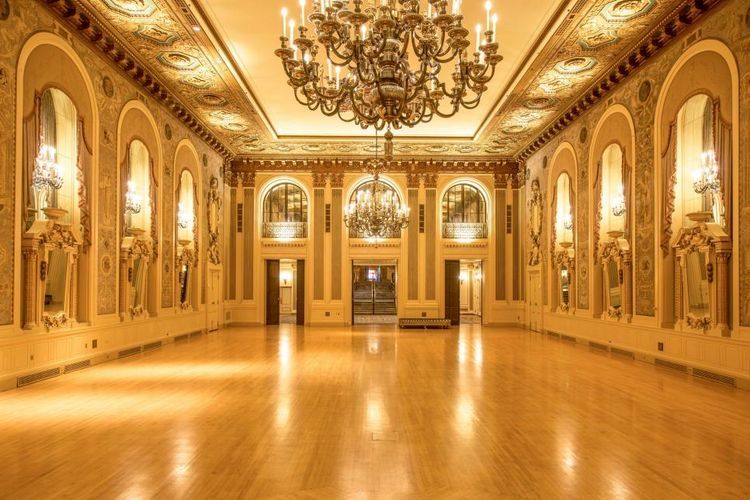
Your venue tour happened in June. The room was empty, the sales manager said yes to everything, and you left thinking the hard part was done. Now you are five weeks out. Your caterer wants to know where the fryer plugs in. Nobody has confirmed that 140 ceremony chairs can be flipped for dinner in 45 minutes. A wedding venue walkthrough is where those assumptions turn into written answers. It is the most useful hour on your calendar between signing the contract and the wedding day.
Plan on Two or Three Walkthroughs, Not One
The tour you took before signing was a sales appointment. The person who showed you the ballroom usually works in sales. They keep a Monday-to-Friday schedule, and they will not be on site on your date. That is not a scandal. It is how most venues are staffed. It does mean every answer from that first visit needs re-confirming with the person who actually runs Saturdays.
My rule after years of these: nothing promised on a sales tour is real until somebody in operations repeats it.
Most couples end up making two visits. Anyone using a raw space, a private estate, or a tent should plan on three.
- The sales tour, before you sign. Thirty to forty-five minutes, run by sales, staged to show the room at its best.
- The design or production visit, three to six months out. Bring your florist, your rental rep, or your full-service wedding planner. Solve one problem: rigging, tent staking, or a ceremony rain location.
- The final wedding venue walkthrough, 30 to 45 days out. Sixty to ninety minutes, operational, no romance. Floor plan and timeline get locked here.
Ask the same question at all of them. Who is the on-site manager for my date, and can I meet them first? Hotels and country clubs often say staffing is not assigned until two weeks out. Hear that clearly. It means your planner, not the venue, holds the institutional memory of everything you agreed to. Anyone hiring month-of coordination should get that planner signed before the final visit, not after it.

When to Schedule the Final Wedding Venue Walkthrough
Thirty to forty-five days out is the window for a final wedding venue walkthrough. Go earlier and half your vendors have not finalized their needs. You will walk the room asking questions nobody can answer yet. Go later and the fixes get expensive. Rental orders typically lock 14 days out. Final counts are due to catering 10 business days ahead. Anything you find after that arrives with a rush fee attached.
Time of day matters more than couples expect. Book the visit for the hour your ceremony starts. Most couples push back, because 11:00 on a Tuesday is easier for everyone involved. Take the harder slot anyway. If you marry at 5:00 and sunset is 6:34, the light on the west wall during dinner is a design fact. That is not a detail. Photographers care about this, and plenty will join a wedding venue walkthrough for free if you ask early.
Two more scheduling questions while you are there. Is there an event the night before or the morning of, and does it compress your load-in? A Friday wedding in the same ballroom can push your florist from a 7:00 start to 9:00. Then ask what else is happening in town that day. Farm venues near other farm venues share noise. Downtown venues share road closures, marathons, and festival traffic that can strand a 56-passenger shuttle for an hour.
Power, Load-In, and the Kitchen Nobody Looks At
A wedding venue walkthrough earns its fee in the back of the house. Start at the service entrance, not the front door. Measure the path a rental truck has to take. Can a 53-foot trailer turn into the drive, or does every delivery come off a box truck? Is there a dock at truck height? Or will four people carry 200 chairs up a flight of stairs at $45 an hour? If a freight elevator is the only route, write down its interior dimensions. An 8-foot ceremony arch does not fold.
Power next. A live band with a full PA and lighting rig generally wants two dedicated 20-amp circuits. A DJ wants one that nothing else shares. Find the actual outlets, then ask which breaker each one sits on. Barns and estates are the usual offenders. Everything traces back to a single panel, and the coffee urns trip it during toasts. If the answers feel thin, price a towable 20kW generator. Expect roughly $600 to $1,100 for the weekend, plus fuel and a delivery window somebody has to babysit. Couples will spend $4,500 on ceremony florals and then flinch at a $700 generator. The generator is what keeps the party running.
Then the kitchen. A full commercial kitchen and a prep-only room with a three-compartment sink are different products. Caterers add a build-out or equipment fee when they have to truck in convection ovens and hot boxes. That line runs $400 to $900.
Write these numbers down before you leave the back of the house:
- Loading dock height, or the count of stairs between truck and room.
- Freight elevator interior dimensions, door width included.
- Circuits and amperage at the band or DJ position.
- Ice source, who buys it, who hauls it. Plan on 1.5 pounds per guest on a warm day.
- Trash: dumpster access, whether it is shared, and who removes 40 bags at 1:00am.
Those last answers move a catering quote more than most couples’ entire ceremony flower budget.

Contract Questions to Ask While You Are Standing There
Bring the signed contract. Not a summary, the actual document, printed. Standing in the room with the terms in hand is how you catch the gap. The paper says one thing. The space allows another.
Start with the hard out. Most venues cut amplified music at a set hour, commonly 10:00pm outdoors and 11:00pm or midnight indoors. Many are bound by a municipal noise ordinance that no one on staff can waive. Overtime usually sells in one-hour blocks at $500 to $1,500, and it often has to be bought in advance. It should not be decided at 10:45 by a groomsman with a credit card. Ask who can approve overtime that night, then write down the name.
Work through the rest as you walk:
- Certificates of insurance. Most venues now want $1 million per occurrence and $2 million aggregate from every vendor. The venue gets named as additional insured, and certificates are filed 30 days out.
- Vendor lists. A preferred list is a suggestion. An approved or exclusive list is a rule. Ask the price of bringing in an off-list caterer, because $1,500 to $3,000 is a common answer.
- Per-person add-ons. Cake cutting runs $3 to $6 a head. Corkage runs $18 to $25 a bottle. Both look small until you multiply them out. At a guest count near the national average tracked in The Knot’s Real Weddings Study, those two lines clear $1,000.
- The flip. If ceremony and dinner share a room, confirm the flip is included in your rate. Ask how many staff perform it and how long it takes. Sixty minutes with a crew of six is realistic for 150 chairs. Some venues charge $500 to $1,500 for the labor.
Email the answers to the venue that same afternoon as a numbered list. Ask them to confirm or correct in writing. That email is your record. Verbal promises made at a wedding venue walkthrough evaporate when that staff member takes a job across town. In this industry, that happens constantly.
Measure the Room, Not the Vibe
Capacity numbers on a venue website are theoretical. They assume 10-person rounds packed tight, no band, no lounge, no bar inside the room. Plan on about 12 square feet per guest for a seated dinner with a dance floor and service aisles. Leave five feet between table edges so servers can work.
Part of any useful wedding venue walkthrough is dull arithmetic. Bring a tape measure or a laser and check the things that generate change orders. A dance floor needs roughly 4.5 square feet per dancer. At a normal wedding, 40 to 50 percent of guests are on it at once. For 120 guests, that is about 15 by 15. An eight-piece band needs a stage closer to 16 by 20, while a DJ works fine in 8 by 10. Measure ceiling height under any chandelier your florist wants to hang from. Get rigging points and their load ratings in writing before anyone quotes an install.
Count the unglamorous things too:
- Restrooms. Two stalls for 175 guests means a line through cocktail hour. A trailer runs $1,200 to $2,800 for the night.
- Parking, at roughly one car per 2.5 guests. If the math fails, shuttles run $110 to $160 an hour with a four-hour minimum.
- A room where the band can stash empty cases.
- Somewhere the photographer can sit down and eat.
- A place to hide 30 rental crates that the head table cannot see.
That last one gets skipped constantly. Then the crates end up stacked behind the sweetheart table in every wide shot of the room.

Who Should Come to the Final Walkthrough
The guest list for a wedding venue walkthrough should be short and functional. Four people is the right roster: you, your planner or day-of coordinator, the venue’s event manager, and your catering lead. Each one can make a decision on the spot. Bring both sets of parents and the working meeting turns into a tour. The questions that matter stop getting asked.
Invite your DJ or bandleader if power or stage placement is unresolved. Your florist should come if anything is being hung, staked, or installed. Photographers are optional and genuinely useful. They will notice the ceremony faces straight into 5:00 sun before anyone else does. Everyone else can be handled by email.
Come with three documents: the current floor plan, the working timeline, and the rain plan. Then walk that timeline in real time and real space, out loud. Guests arrive at 4:30 here, ceremony at 5:00 facing this way, cocktails on this lawn while we flip the room, doors at 6:15, first dance at 7:40. Somewhere in that recitation, somebody says the thing you needed to hear. Usually it is that the bar cannot go in that corner because the service door swings through it.
You should leave with decisions, not impressions. Delivery windows for each vendor. Where the cake sits and who moves it. Which door guests use in rain. Where the marriage license and the rings live during setup. Who has keys, who unlocks what, and how late the last person can stay without triggering a penalty. A good planner turns all of that into a two-page recap. It goes to every vendor by the next morning.
Red Flags to Catch on a Wedding Venue Walkthrough
Some warning signs surface in the first ten minutes of a wedding venue walkthrough. Watch for a venue that will not put overtime rates, flip fees, or load-in times in writing. That refusal is a preview of the wedding day. So is a manager who answers every logistics question with “we do this all the time.” That may be perfectly true. It is still not an answer.
Turnover is the other one to watch. If the person you signed with has left and nobody told you, assume nothing in your file is common knowledge. Ask your new contact to read the contract back to you, specifically the custom terms. Those usually live in an addendum that new staff never open. Be wary, too, of a venue that discourages your vendors from talking directly to its operations team. A sales inbox with a three-business-day reply time is its own warning. During wedding week, three business days is forever.
One more, and couples ignore it constantly: look at how the building is maintained on an ordinary weekday. Burned-out bulbs in the corridor, a jammed restroom door, patio furniture stacked on the ceremony lawn. None of that is staged for you, and the crew that has not fixed it in six weeks is the crew setting your room.
None of this means you walk away from the venue. It means you document more, confirm more in email, and add 30 minutes of slack to the setup schedule.
If You Cannot Attend in Person
Out-of-town couples run a wedding venue walkthrough remotely all the time, and it works when it is structured. Send your planner with a written shot list instead of asking for a general video tour. Live video over venue wifi drops constantly and burns an hour. A 12-minute narrated video, a set of measured photos, and a same-day written recap give you far more usable information. Ask specifically for the service entrance, the electrical panel, and the restroom count. Get the ceremony site shot at your ceremony hour.
Marrying abroad changes the math. A destination wedding specialist who works that region already knows the venue’s power situation, its rain contingency, and which local caterers it actually likes. That knowledge can save you a flight. Buy one in-person visit anyway if the budget allows. Spend it on the final walkthrough, not the first tour. Photos sell rooms fine. Photos will not tell you the ceremony lawn slopes four degrees toward the lake.
Put your wedding venue walkthrough on the calendar now, roughly five weeks out. Confirm the venue, your planner, and your caterer in the same email. Those Saturdays fill early. If you are still hiring, see how planner matching works and ask every candidate to describe their walkthrough process. The ones who answer with a checklist and a same-day recap email have done this a hundred times.