Your final catering invoice lands three weeks out. There it is: a 22% service charge on an $18,000 food and beverage total. That is $3,960. Meanwhile a friend has sent you a tipping spreadsheet that says to hand cash to the caterers. So now you are wondering if you are about to pay gratuity twice. It is the most common money question I get in the last month before a wedding. Most of the online advice gets it wrong.
Wedding vendor tipping is not a fixed rulebook. It is a few near-obligations, a lot of optional-but-appreciated gestures, and one or two traps. Those traps can cost you thousands if you skip the contract fine print. I have handed out the envelopes at the end of the night. I have watched couples over-tip out of guilt, and watched others stiff a hardworking crew because nobody warned them the tip was expected. Here is how it actually works.
Do you actually have to tip wedding vendors?
Short answer: no vendor can force a tip. But some tips are so customary that skipping them reads as a slight. Think of your vendors in three buckets. In the first are the people who genuinely expect a tip: catering staff, bartenders, hair and makeup artists. Next come the ones where a tip is a warm bonus, not an assumption. Your photographer, DJ, and florist usually sit here. Last are the business owners. They set their own pricing and keep the profit, so most expect nothing at all.
The distinction that matters most is owner versus employee. A solo photographer who runs her own studio priced the job to be worth her time. Her tip is a kindness, not an obligation. A banquet server carries plates for nine hours on an hourly wage. For that server, the tip is a real part of the night’s pay. Same event, very different math.

One more note before the numbers. Tipping is regional, and it is personal. Couples in big coastal cities tend to tip more, in both percentage and absolute dollars. The vendors there price higher, and the norm is baked in. If your budget is tight, nobody reputable will judge you for tipping modestly. A genuine thank-you note and a five-star review can stand in for cash. Honestly, reviews and referrals are worth more to most vendors than a $50 bill. I will come back to that at the end.
Check the contract first: service charge is not the same as a tip
Before you budget a dollar for tips, read the fine print on your two biggest contracts: catering and venue. That 22% service charge line is where couples lose the most money to confusion. A service charge is a fee the caterer or venue keeps. It covers operating costs and, sometimes, staff wages. It is not automatically a gratuity. In fact, the IRS treats an automatic service charge as wages, not a tip. In many states, the caterer is not legally required to pass any of it to the servers.
So ask one direct question, in writing. “Does the service charge include gratuity for the staff, and what percentage reaches them?” You want the answer in an email you can save. Say the contract reads “a 20% service charge, all distributed to staff as gratuity.” Then you are done. Do not tip the catering team again unless someone was exceptional. Now say it reads “a 22% administrative service charge,” with no mention of gratuity. That money is likely going to the house. Plan to tip the staff separately.

I have watched couples pay a $3,960 service charge, then hand out another $2,000 in cash because they assumed the fee was overhead. I have also seen couples assume the fee covered tips when it did not. A fifteen-person crew went home with nothing. Both outcomes are avoidable with one email. A good planner flags this during contract review. That is one of the quieter reasons a coordinator pays for itself. If you are weighing whether that help is worth it, read our breakdown of what a wedding planner actually does. It shows where they catch costs you would miss.
Wedding vendor tipping amounts: the vendor-by-vendor breakdown
Here is where the real numbers live. These are 2026 ranges that hold up across most of the US. Adjust them up for major metros and luxury weddings. National etiquette sources like The Knot’s tipping guide track close to these. I just round to whole bills for envelope math.
Catering and banquet staff. If gratuity is not in the service charge, plan on 15% to 20% of the food and beverage total. Or use a flat $25 to $50 per server and $50 to $100 for the captain. Hand it to the captain to split, or to your planner.
Bartenders. Tip $20 to $50 each if a gratuity is not already built in. Watch for a tip jar. If you paid for an open, hosted bar, ask that no jar be set out. Then tip the bartenders directly at the end.
Hair and makeup artists. Tip like you would at a salon: 15% to 20% of the service total. On a $1,200 bridal-party beauty bill, that is $180 to $240. Split it among the artists who did the work.
Delivery and setup crews. Give $10 to $20 per person to the folks who haul in chairs, tables, and rentals. The same goes for florist drivers who build an elaborate install. These crews are easy to forget, because they leave before the party starts.
Transportation drivers. Plan on 15% to 20% of the transportation bill. Many limo and shuttle contracts already add an 18% to 20% gratuity. Check the contract, same rule as catering.
Valet, coat check, and restroom attendants. If the venue does not fold it into a fee, budget $1 to $2 per guest for valet. A flat $50 to $100 per attendant station also works. A photo booth attendant who runs the machine all night is worth $20 to $50.
For your photographer, videographer, DJ or band, and florist, tipping is optional. It usually depends on whether they own the business. A common gesture is $50 to $200. That fits a photographer or DJ who works for a larger company. It also fits an owner who went well beyond the contract. Ceremony musicians often get $15 to $25 each. None of it is required. A heartfelt note plus a public review carries real weight.
The vendors you usually do not tip (and the nuance)
Business owners are the group couples over-tip most, usually out of nervous generosity. Take a solo photographer who runs her own studio, a florist who owns her shop, or an independent planner charging a $4,500 fee. None of them expect a tip. They built their pricing to be profitable already. An envelope is a lovely surprise, but its absence is not a snub. No professional will think less of you.
Still, the line blurs. Say a studio owner personally shot your twelve-hour day. She stayed an extra hour when the toasts ran long, and never once made you feel rushed. That is worth acknowledging. Plenty of couples tip owners in that spot, and the owners remember it. With an owner, a tip says “you went beyond what I paid for.” With an hourly employee, the tip is simply part of the night’s expected pay.
Officiants sit in their own category. A professional officiant who runs a business is like an owner: optional. A religious officiant is different. If the ceremony is at a house of worship, the custom is a donation, not a personal tip. That donation often runs $100 to $500. The clergy member may decline a personal gratuity entirely. When in doubt, ask the office how donations are usually handled. Your planner has quirks too, and our full-service planning guide covers where the fee already accounts for the work.
How to budget for tips without blowing your number
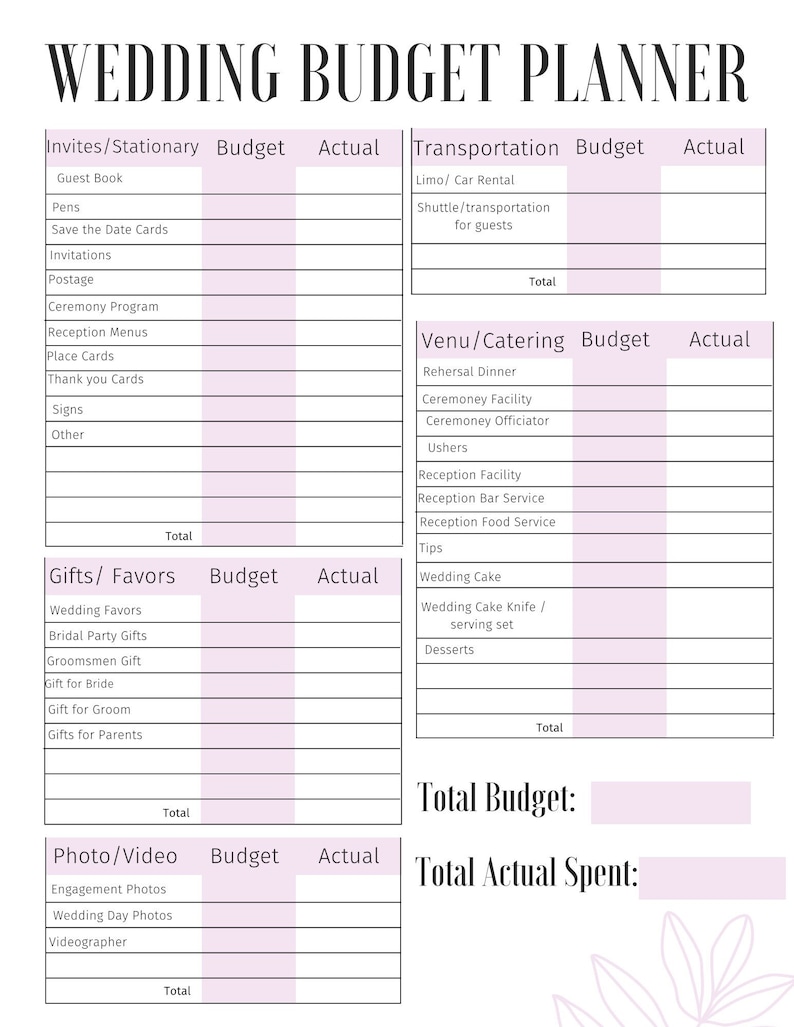
Tips are the line item couples forget until the invoices land. Then it feels like a surprise tax. And it is not small. On a $45,000 wedding with a full vendor roster, gratuities can run $1,500 to $3,500. The exact figure depends on how much is already baked into service charges. Build the wedding vendor tipping number early, on your first pass at the budget. Do not leave it for the panicked final month.
Try this clean way to estimate. Take your two or three biggest labor-heavy contracts: catering, bar, and beauty. Check whether gratuity is already included on each. Where it is not, set aside the percentage from the section above. For the optional vendors, pick a flat cap. Say $100 per key vendor you want to thank, and stop there. You do not owe a percentage of a $6,000 photography contract. A round $100 to $150 is plenty when you tip an owner at all.
Run that math on a real wedding. Say catering is $18,000 with gratuity already in the service charge, so the staff are covered. Your bar runs a separate $2,500 with no gratuity, so set aside about $450. Beauty is $1,200, so plan $200. Add $40 for the two delivery crews and $150 total for the DJ and photographer you adored. That is roughly $840 in tips you can name before the final month, not guess at.
If your budget is genuinely tight, put the hourly people first. That means servers, bartenders, beauty artists, and delivery crews. They are the ones who depend on tips. Trim or skip the optional tips for owners and salaried vendors. That order sends your money where the norm is strongest. Couples on a smaller total often lean on a good day-of coordinator to route these dollars. You can see how that role works in our guide to day-of coordination. For where every other dollar lands, our blog digs into venue, catering, and vendor pricing.
How to hand out tips on the wedding day
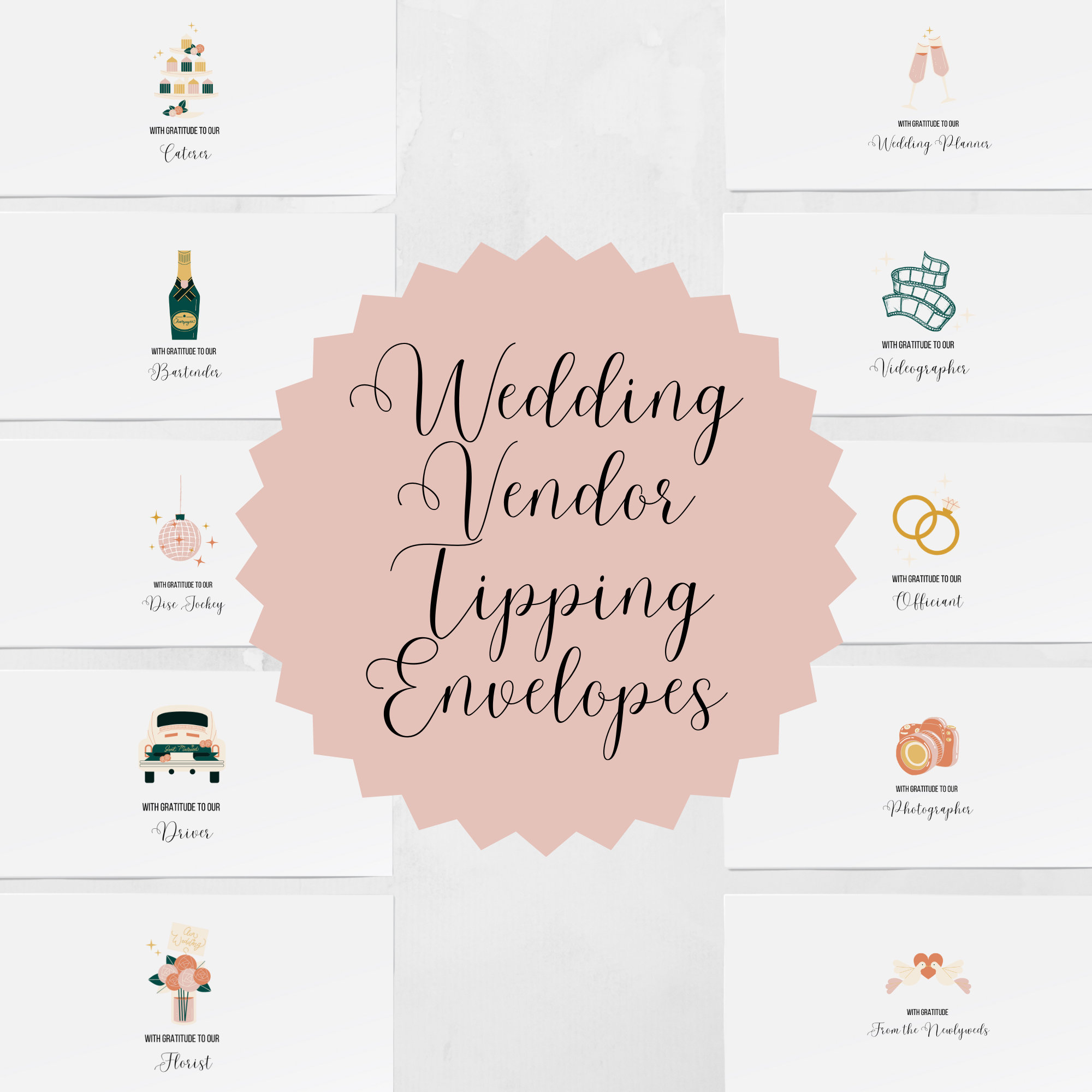
The logistics of wedding vendor tipping trip people up more than the amounts. You do not want to be counting cash in your gown at 11 p.m. Prepare it all the week before. Get cash, then write each vendor’s name and amount on a sealed envelope. Add a two-line note inside if you have time. On the morning of, hand the whole stack to one trusted person. Make it your planner, your coordinator, or a level-headed relative who is not in the wedding party.
Timing matters by vendor. Tip the people who leave early right when their work ends. That means hair and makeup, ceremony musicians, and delivery crews. They will be gone before the reception peaks. For the reception staff, tip at the end of the night. Route the servers and bartenders through the catering captain, and the band through its leader. A quick word of thanks with the envelope beats the cash alone. It is the kind of small grace vendors mention to each other.
Handing this off to a planner? Give them a simple sheet: vendor name, envelope amount, and delivery time. This is standard work for a coordinator. It is exactly the end-of-night detail that falls apart when a well-meaning uncle runs it instead. If you have not booked that help yet, our how it works page covers the matching process step by step.
Thank-you notes and reviews: the tip that costs nothing
Here is what I tell every couple who feels stretched. A specific, public five-star review is worth more to most vendors than a cash tip. A photographer earns clients from reviews for years. Your kind words end up quoted on a florist’s site. For a DJ, showing a nervous couple your feedback can close the next booking. Cash disappears into one night’s pay. A review compounds.
So write them. Send a handwritten note in the two weeks after the wedding. Name the specific thing each vendor did well. Post honest reviews on the platforms they actually use, whether that is Google, The Knot, or WeddingWire. Tag them if you share photos. For the vendors you truly loved, tell your engaged friends and offer to be a reference. That word-of-mouth is the currency the whole industry runs on. It costs you nothing but twenty minutes and some real gratitude.
Start your wedding vendor tipping plan the day you sign the catering contract, not the week of the wedding. Read the service charge line. Ask the one email question. Write the total into your budget now. Everything after that is just sealing envelopes.