
You tour a barn venue in late spring, the sales manager hands you a glossy folder, and somewhere on page three it says “on-site coordinator included.” You leave thinking you just saved $2,500. Six months later you are standing in the parking lot at 4 p.m. on your wedding day wondering who is supposed to tell the string trio where to set up, because the coordinator who sold you the room clocked out the moment she unlocked the doors.
The venue coordinator vs wedding planner mix-up is the most common misunderstanding couples carry into planning, and it costs real money and real stress. It is not a trick question. These are two different jobs with two different bosses, and knowing where one stops and the other starts is the difference between a smooth day and a day where you are fielding the caterer’s questions in your dress.
What a venue coordinator actually does
A venue coordinator works for the venue, not for you. That single sentence carries more weight than it looks. Their job is to protect the property, hit the venue’s operational marks, and make sure the building gets used and cleared on schedule. They know the things that touch the building itself: where the tables go under the fire code, when the kitchen needs a final headcount, how long you have before the noise ordinance kicks in, where guests park, and which doors lock at 11 p.m.
What they typically do not do is manage your vendors, build your timeline around your getting-ready schedule, or chase down a florist running 40 minutes late. Their loyalty, contractually, runs to their employer. If the venue’s interest and yours diverge, say the venue wants you out by 10:30 but you paid your band through 11, the coordinator enforces the venue’s position rather than negotiating on your behalf.

There is also high turnover in this role. The person who charmed you on the sales tour is frequently not the person working your wedding. Many venues rotate event staff, and some quietly swap your contact two or three times between booking and your date.
Ask directly: will the person I am talking to today be on-site the day of my wedding? Get the answer in writing. If they will not commit, you have learned something useful about how much of the day this person will actually own.
What a wedding planner does that a coordinator won’t
A wedding planner, or at minimum a day-of coordinator you hire independently, works for you. That one difference reshapes everything. They build a minute-by-minute timeline that starts when your hair appointment begins, not when the venue doors open. They confirm every vendor the week before, send the load-in schedule to the photographer and the DJ, and become the one phone number every vendor calls, so that number is never yours.
A full-service planner goes much further upstream. They help you set and hold a budget, recommend vendors who fit your style and price point, read contracts before you sign, manage your payment schedule, and run your design from the linens to the escort cards. If you want the full scope of that role against a lighter touch, the breakdown between full-service planning and a leaner package is worth reading before you decide how much help you need.
The gap shows up most sharply in the unglamorous middle of the day. Who tells the grandparents which side to sit on? Who holds the rings when the best man disappears to the bathroom at the worst possible moment? Who notices the cake is melting and moves it out of the sun? A planner is paid to catch those, and a venue coordinator is usually not even in the room when they happen. One is watching the building. The other is watching your wedding.
A real example from a Saturday last October: the rental company dropped 120 chairs but only 110 had been ordered correctly, and the ceremony arch arrived in two boxes with no hardware. The venue coordinator pointed at the lawn and said the setup was the planner’s call. The planner had a cordless drill in her kit, borrowed zip ties from the caterer, and had the arch standing before the first guest parked. Nobody in the wedding party ever heard about it. That is the line between the two roles, drawn in a parking lot at 2 p.m.
Where the two jobs overlap, and where they don’t
The confusion in the venue coordinator vs wedding planner debate is fair, because there is genuine overlap on the day itself. Both will be present. Both will talk to the caterer. Both might be holding a clipboard. But the overlap is narrower than it looks, and the divisions matter:
- Setup and breakdown of venue property: the coordinator owns this. Tables, chairs, the building’s own AV, parking, trash.
- Your personal items and outside vendors: your planner owns this. Place cards, favors, the rented dance floor, the band’s stage plot.
- Timeline authority: a planner builds and runs yours; a coordinator enforces the venue’s hard stops.
- Problem ownership when something breaks: a planner solves it; a coordinator tells you it is not their department.
The cleanest way to think about it: the venue coordinator answers one question, is the building ready? Your planner answers a different one, is the wedding ready? Those sound alike at a tasting. They feel very different at 5:45 when the ceremony was supposed to start at 5:30 and the officiant is stuck on the interstate.

One more practical wrinkle. A good venue coordinator and a good planner make each other’s jobs easier and will happily split labor. A planner who has worked your venue before already knows the coordinator, knows the noise rules, and knows which loading door the caterer should use. That relationship is part of what you pay a planner for, and it is why an experienced local planner is often worth more than their headline rate suggests.
So do you actually need both?
Sometimes you genuinely do not. If your venue is an all-inclusive property with in-house catering, in-house rentals, a fixed floor plan, and a coordinator who has confirmed in writing that they will run your timeline and manage your outside vendors, you can probably skip a separate planner. That setup exists, mostly at hotels, country clubs, and dedicated wedding venues that run 80 to 150 events a year. Read the contract language closely: does it say the coordinator will “assist with” your timeline, or “create and execute” it? “Assist” is a soft word that means you are still the one in charge.
Most couples, though, land in the gap. The typical scenario is a venue that includes a coordinator for setup and venue logistics but expects you to bring in a caterer, a florist, a DJ, rentals, and a baker. Five or more outside vendors, each with a separate load-in time and contact, and nobody whose job is to make them work together. That is the gap a day-of coordinator is built to fill, usually for somewhere between $1,200 and $2,800 depending on your market and guest count.
Here is the test I give couples:
- Three or fewer outside vendors and the venue handles food? You can probably lean on the coordinator.
- Four or more, or you are bringing in your own catering? You want your own person.
The middle path more venues now allow is month-of coordination, where someone takes the reins about 30 days out, confirms everything, builds the timeline, and runs the day, without the cost of full planning.
The contract language that tells you the truth
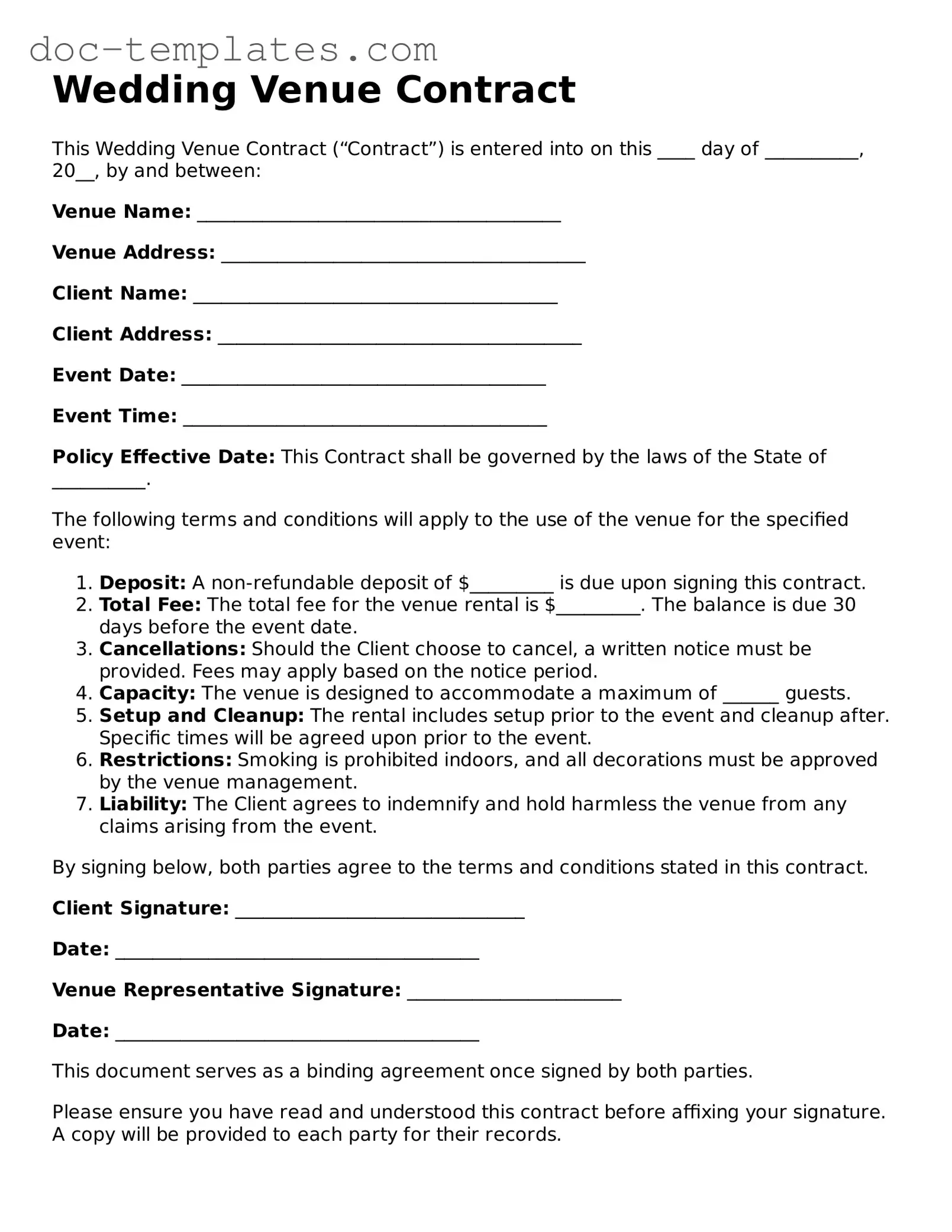
The venue’s brochure will say “coordinator included.” The contract tells you what that actually means, and the two are rarely the same. Before you assume the role is covered, pin down these specifics in writing.
Ask how many hours the coordinator is on-site. A common answer is that they arrive when setup begins and leave when dinner is served, which means the back half of your reception, the toasts and the send-off, has nobody from the venue owning it. Ask whether they run the rehearsal. Many do not, and a rehearsal nobody leads is a ceremony that starts late. Ask whether they will hold and distribute final vendor payments and gratuities if you leave envelopes, because if the answer is no, that job lands on a parent.
Then ask the question that exposes the whole thing: if my florist does not show up, whose problem is that? A venue coordinator will, honestly, tell you it is yours. A planner you hired will tell you they are already calling the backup. That answer is what you are buying when you pay for your own person, and it is why the questions you ask before signing matter as much as the price. The cheapest coordinator in the world is expensive if their job ends the moment something goes wrong.
One more clause to read closely is the force-majeure and cancellation language, because that is the venue protecting itself, and it underlines the core point. The venue’s contract is written to protect the venue. Nobody in that building is contractually obligated to protect you unless you hire them to.
What it costs to cover the gap
Let’s put real numbers on it. A day-of coordinator in a mid-size U.S. market runs $1,200 to $2,800. Month-of coordination, with more lead time, typically lands between $1,800 and $3,500. Partial planning, where someone helps you book vendors and then runs the day, ranges from roughly $3,000 to $6,000. Full-service planning is usually a flat fee in the $5,000 to $12,000 range, or a percentage, commonly 10 to 15 percent of your total budget. Those bands track with the national averages for wedding planner cost that The Knot publishes each year.
Take a $35,000 wedding at a barn venue that includes a coordinator and a fixed table layout but no catering. You bring five outside vendors, each with a load-in window the venue coordinator has no reason to track:
- Taco caterer at 1 p.m., needs the service tent and a power drop.
- Florist at 2 p.m. for the arch and the tablescapes.
- Band at 3 p.m. with a stage plot and a sound check.
- Photo booth and baker at 4 p.m., both asking where to park.
A $1,800 month-of coordinator who confirms all five the week before and sequences that afternoon is buying down the biggest risk in the budget for about 5 percent of the total. Skip it, and the likeliest failure is not a disaster, it is forty minutes of dead air while you, in your dress, text the band about parking.
Now weigh that against what a venue coordinator covers, which on a $40,000 wedding might be $0 in extra cost because it is bundled into the venue fee. That bundling is exactly why couples assume they are covered. The honest math: if the coordinator runs your timeline and your vendors, you saved real money. If they do not, you have a gap that one missing vendor or one 45-minute timeline slip can blow well past the cost of the planner you skipped. For a tight budget, the move is not to skip coordination. It is to right-size it. Hire a budget-conscious day-of coordinator, brief them on exactly what the venue’s coordinator will and will not handle, and let the two split the work.
The bottom line on venue coordinator vs wedding planner
The venue coordinator vs wedding planner question is really about who is on your side when something goes wrong, and the answer is almost always that you need at least one person whose paycheck depends on your day, not the building’s schedule. Pull your venue contract, find the word “coordinator,” and read the two sentences around it. If it says “assist” instead of “manage,” or if the hours end at dinner, you have found your gap, and now you know what it costs to fill it.
Before your next venue tour, write down one question and ask it out loud: if my outside vendors hit a problem at 6 p.m., who fixes it? Whoever the venue points to had better be standing in the room. If they cannot name that person, you just found your reason to hire your own. Keep that one answer in writing with the rest of your venue paperwork, so the promise made on the tour is the same promise you can hold someone to on the day.