
You are standing in the venue’s bridal suite at 11 p.m. The last guests have gone. You have thank-you envelopes for almost everyone: the caterer, the band, the hair stylist. Then you reach the one person who held the entire day together, and you freeze. Do you tip the wedding planner? And if you do, how much to tip a wedding planner is actually normal in 2026?
This question lands hard in the final two weeks before a wedding. By then it is usually too late to budget for it cleanly. Here is the short version. Tipping a planner is optional and appreciated, not mandatory like it is for a restaurant server. The longer answer depends on a few things. Does your planner own the company? What kind of service did they provide? And how did the day actually go? Let’s get specific.
Are You Even Supposed to Tip a Wedding Planner?
A wedding planner is not in the same etiquette category as a banquet server or a delivery driver. They set their own rates. They run a business, and the fee already reflects what they decided their time is worth. So tipping is genuinely optional. Nobody will chase you down, and a good planner will never expect it or hint at it.
Tipping has crept upward at the higher end of the market, though. Among couples who hire full-service planners for a six-to-twelve-month engagement, a thank-you envelope is now closer to the norm than the exception. The logic is simple. Think of the planner who fielded 400 of your texts, talked you off the ledge during a venue change, and tracked down a florist who ghosted you in month four. After a stretch like that, cash on top of the fee reads as gratitude, not obligation.
The distinction that matters most is ownership. If your planner owns the business, the entire fee already flows to them, so a tip is pure bonus. If you worked with an associate or assistant at a larger firm, that person earns a salary or hourly rate while the owner keeps the margin. There, a tip lands directly in the pocket of whoever did the day-of labor. That is usually exactly who you want to reward.
It helps to know which kind of planner you booked. The solo planner who answered your first inquiry email, signed the contract, and showed up on the wedding day is almost certainly the owner. A larger studio, the kind that books 40 or more weddings a year, usually pairs you with a lead coordinator and one or two assistants under a head planner you may have met only once. Tip the people who were actually in the room with you at midnight, not the name on the letterhead.
How Much to Tip a Wedding Planner in 2026
Here is where people want a number, so here are the ranges I actually see change hands. For an owner-operator who charged a flat fee, a typical tip runs $100 to $500. Most couples land around $200 to $300. If your planner billed a percentage of your budget, some couples tip 10 to 20 percent of the planning fee instead. On a $5,000 planning fee, that is $500 to $1,000. That is generous, at the high end of what I would call standard, and broadly in line with the ranges The Knot publishes in its annual vendor tipping guide.
Service level shifts the number. A day-of coordinator who came in for the final 30 days, ran the rehearsal, and managed the wedding itself is commonly tipped $50 to $200. That is intense, compressed work, often a 12-hour day on their feet. A month-of or partial planner sits in between, usually $100 to $250.
If an assistant or second coordinator is on site, tip them separately. Twenty to fifty dollars each is normal. That money goes to people who are frequently underpaid and rarely thanked. One clean method: hand the lead planner a larger envelope plus a few smaller ones, and ask them to share it out with their team. They know who carried the day.
Don’t let the percentage math stress you out. A flat amount that feels right is completely acceptable. On a tight budget, a heartfelt $75 and a five-star review beats an awkward, resented $400 you couldn’t really afford.
When a Tip Makes Sense, and When It Doesn’t
Go above your default range when the planner did something no contract could require. The venue lost power 90 minutes before the ceremony, and they found a generator. A vendor no-showed, and they personally drove out to collect the cake. Your difficult uncle threatened to derail the toasts, and the planner quietly handled it before you heard a word. That is the kind of save that earns the top of the range, or more.
Stay at the low end, or skip the tip, when the service was merely adequate. The same goes for when something went genuinely wrong on their watch. Did the timeline collapse because the planner lost track of it? Were vendors left unbriefed? Did you spend your own reception solving problems they were paid to prevent? You are not obligated to reward that. A tip is a thank-you, not a tax, and withholding it is honest feedback.
There is also the question of what is already baked in, so read your contract before you decide. Some luxury and destination planners fold a service charge or gratuity line into their pricing, especially for multi-day events. A few destinations even have local norms where tipping is built into vendor invoices. If a gratuity is already itemized, you have met the expectation. Anything beyond that is purely your call.
For a concrete example, I have seen destination contracts that read “an 18 percent service fee applies to all on-site coordination,” which means the gratuity is already collected and handed to staff. Compare that with a domestic full-service contract that says nothing about gratuity at all. The first has tipping built in. The second leaves it entirely to you. Five minutes with the signed PDF settles the question before the wedding week even starts.
Cash, Check, or Something Else?
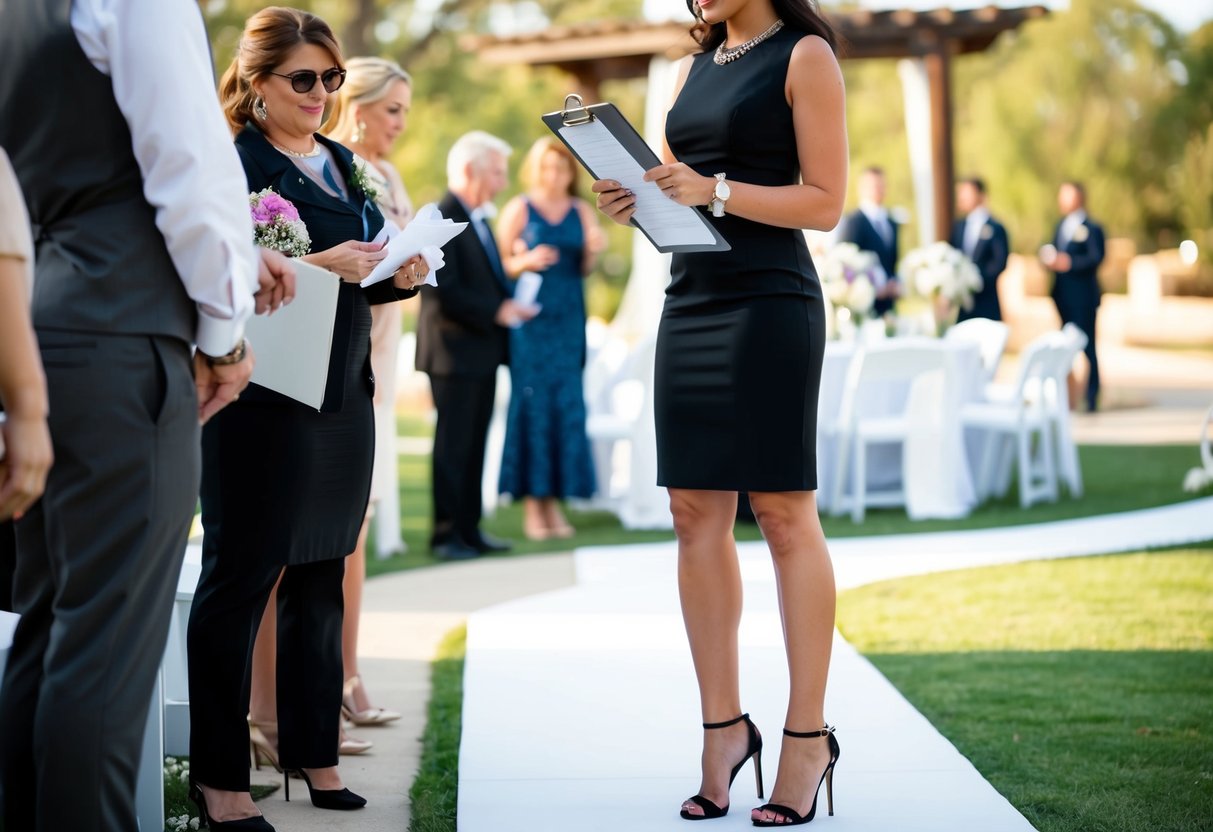
Cash is cleanest, and it is what most planners quietly prefer. It is immediate, it is private, and no processing fee shaves a slice off the top. Put it in a sealed envelope with the person’s name on the front and a one-line note. Hand it over at the end of the night, or have your point person deliver it. If you are tipping a team, separate envelopes prevent any awkward splitting math later.
A personal check works fine for larger amounts and leaves you a record, though it loses the in-the-moment warmth of cash. Some couples now send the tip through Venmo or Zelle a day or two after the wedding. That is perfectly acceptable, and honestly more practical when you are exhausted and trying not to lose an envelope at midnight. If you go digital, send it within 48 hours, while the day is still fresh for everyone.
One practical move: assign the envelopes to someone other than yourself. The couple should not be tracking down vendors during cocktail hour. Hand the whole set to a parent, the best man, or the planner’s own assistant at the start of the night, with a short list of who gets what. This is the single most common reason tips never get delivered. The couple gets swept into photos, and the envelopes sit forgotten in a hotel room.
What About the Rest of the Vendor Team?
The planner is one line in a much longer tipping list, and couples routinely blow their cash budget because they never mapped it out. Some vendors expect gratuity by convention. Others rarely receive it. Knowing the difference keeps you from over-tipping in one place and stiffing someone who counted on it.
Here is a realistic snapshot of 2026 norms for the people most likely to be on your day:
- Catering and banquet staff: Often already added as an 18 to 22 percent service charge on the invoice. Read the contract. If it is there, you have covered it. If not, $5 to $20 per server is generous.
- Hair and makeup artists: 15 to 20 percent of the service, just like a salon visit.
- DJ or band: $50 to $150 per musician for a band, or $100 to $300 for a solo DJ who emceed the night.
- Delivery and setup crews: $5 to $20 each, in cash, on the day.
- Officiant: $50 to $100 if they are non-religious. For clergy, a donation to the house of worship is customary.
Two more lines people forget. Transportation drivers, the limo or shuttle company, often add an 18 to 20 percent gratuity to the contract already, so check before you press a separate $40 on the driver. Valet and coat-check staff usually work for tips alone, so a few dollars per car or coat is expected unless the venue posts a “no tipping” sign.
Florists, photographers, and bakery owners who run their own shops generally do not expect tips. The ownership logic that applies to your planner applies to them too. But if a photographer’s second shooter or a florist’s install team did the heavy lifting, $20 to $50 to those individuals is a kind touch that rarely gets extended.
How to Budget Gratuities Before the Wedding
The couples who handle tipping well decide the numbers weeks ahead, not at 11 p.m. with whatever cash is in a wallet. Build a gratuity line into your budget early, the same way you plan for a deposit schedule. On a $40,000 wedding, total tips across all vendors commonly land between $1,500 and $3,000. That covers catering, beauty, music, delivery, and the planner. It is real money, and finding it last-minute is how people end up skipping the very people they meant to thank.
Make a simple tip sheet two weeks out. List every vendor, the amount, whether gratuity is already in their contract, and who will hand over the envelope. Pull the cash in one bank trip. Label the envelopes that night, and drop them in one marked bag for your designated person. This 30-minute task removes the single biggest source of day-of money stress. A good planner often builds this exact sheet for you as part of their final-month checklist, which is one more quiet argument for hiring one. You can see how that final-stretch coordination works on our how it works page.
If cash is tight, prioritize. The people who depend most on tips are the hourly workers: servers, assistants, delivery crews, beauty artists. Owners and your planner can be thanked generously in other ways. Working out how much to tip a wedding planner matters, but it sits below making sure the 19-year-old bartender who worked a double gets their $40.
What Planners Value Almost as Much as Cash
Talk to any independent planner and they will tell you the tip is lovely, but two other things move their business far more. The first is a detailed five-star review, posted within a week while the day is still vivid. Reviews that name what the planner actually did, not just “she was great,” are what convince the next nervous couple to book. The second is a referral to a friend who just got engaged. One warm introduction is worth more to a working planner than almost any tip.
Timing matters more than couples realize. A review left three weeks out, after the honeymoon and the gift returns, tends to be vaguer and shorter than one written the Monday after. Plenty of planners will tell you a single paragraph naming the moment they saved your reception does more for their bookings than a $300 tip. The next couple reads it while deciding whether to trust anyone with their wedding at all.
A short, sincere thank-you note also lands harder than people expect, and planners keep them. After a season of high-stress weekends and clients who vanish the moment the invoice clears, a handwritten card that says what their work meant to you is the thing that gets pinned to the office wall. None of it costs money, and all of it helps the person who helped you.
So if you are torn between a slightly bigger tip and ten minutes spent on a thoughtful review plus a note, do both if you can, but never skip the words. The cash fades. The review keeps working long after your wedding is a photo album. Decide your tipping numbers this week, write them on a single sheet, and assign every envelope to a real person by name. Settling how much to tip a wedding planner, and everyone else on your team, is the difference between thanking the people who earned it and finding forgotten envelopes in a hotel drawer on your honeymoon. If you are still comparing planners and want to know what is included before you commit, our pricing guide breaks down where gratuity does and does not belong in the total.